

Related content
- Oct 22, 2026Sunwin WN-6 6kW Rack-Mounted Load BankThe Sunwin WN-6 is a 6kW rack-mount resistive load bank designed for low-power equipment test scenarios. Adopting a 6U rack-mount form factor, it supports dual-channel single-phase AC230V input with a maximum of 3kW per channel and a total rated power of 6kW.
By combining 0.5kW, 1kW and 1.5kW load units, the WN-6 achieves fine loading steps of 0.5kW, making it suitable for performance verification, factory inspection and maintenance testing of small-scale generators, UPS units, power modules, inverters and other AC power-supply devices. - Oct 21, 2026Sunwin 50kW AC Liquid-Cooled Rack Mounted Resistive Load BankExplore Sunwin's 50kW rack-mount AC liquid-cooled load bank for server thermal, cooling system, UPS and generator testing. Features include Modbus TCP monitoring, 75 L/min cooling flow and automatic unloading protection.
- Oct 20, 2026Sunwin WN-240L 240kW AC Liquid-Cooled Resistive Load BankThe Sunwin WN-240L is a 240kW high-power AC programmable liquid-cooled load bank designed for performance testing, burn-in testing and maintenance of power sources such as generator sets, UPS systems, solar inverters, energy storage systems and industrial electrical equipment. Its core advantage lies in an advanced closed-loop liquid cooling system, delivering 240kW of continuous load capacity with exceptional stability and low noise.
Equipped with intelligent sensors and dual control interfaces (local HMI touch screen + remote PC control), and supporting three-phase 380/400/415/480/690Vac wide voltage levels, the WN-240L ensures precise, reliable and safe testing in demanding industrial environments, especially in indoor or space-constrained test scenarios. - Oct 19, 2026Sunwin 60kW AC Liquid-Cooled Resistive Load BankExplore Sunwin's 60kW AC liquid-cooled resistive load bank for UPS, generator and data center testing. Its compact 10U rack design supports continuous operation, low-noise cooling and independent three-phase step loading.
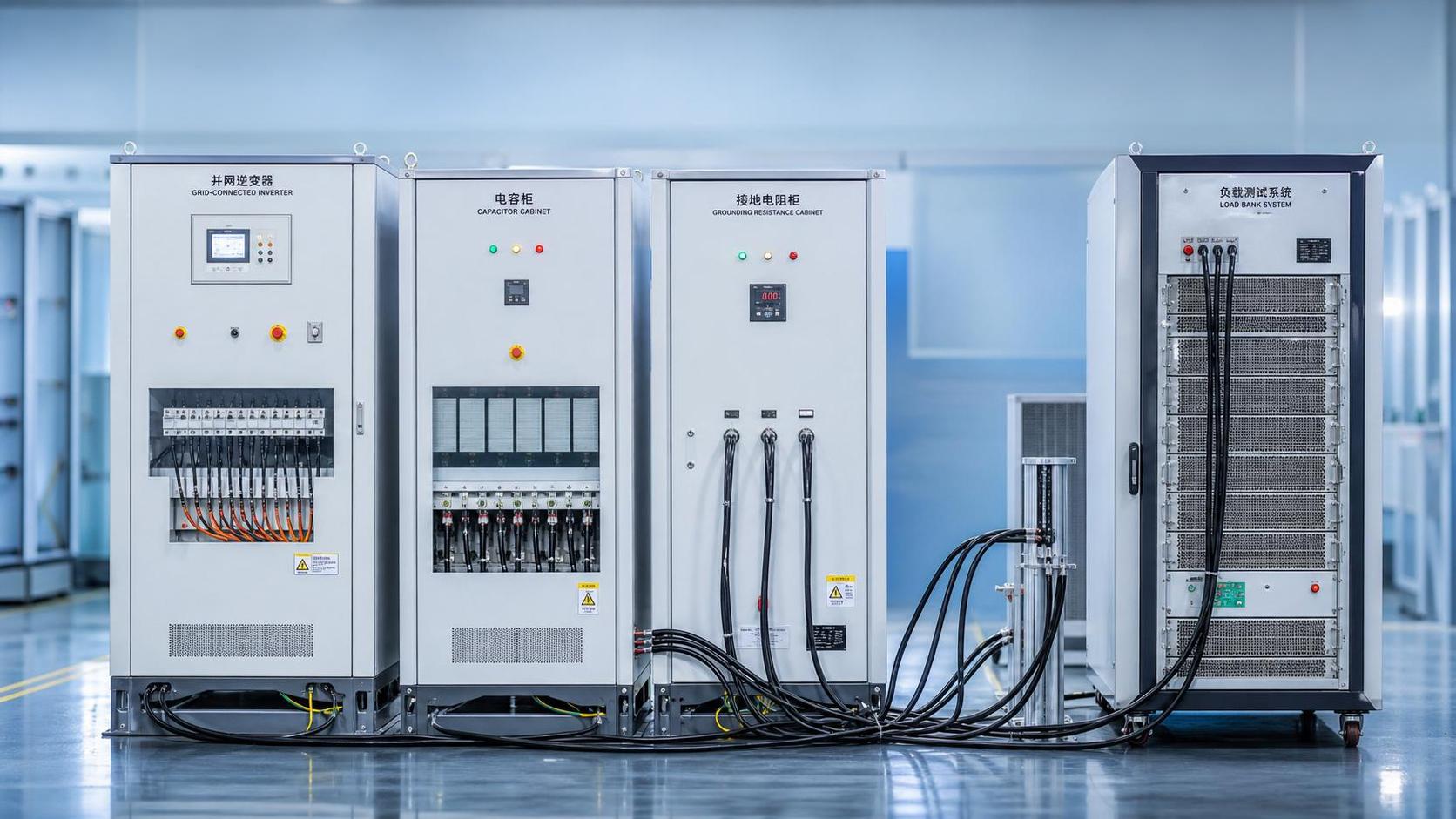
Grid-Connected Inverter demand is entering a more disciplined phase
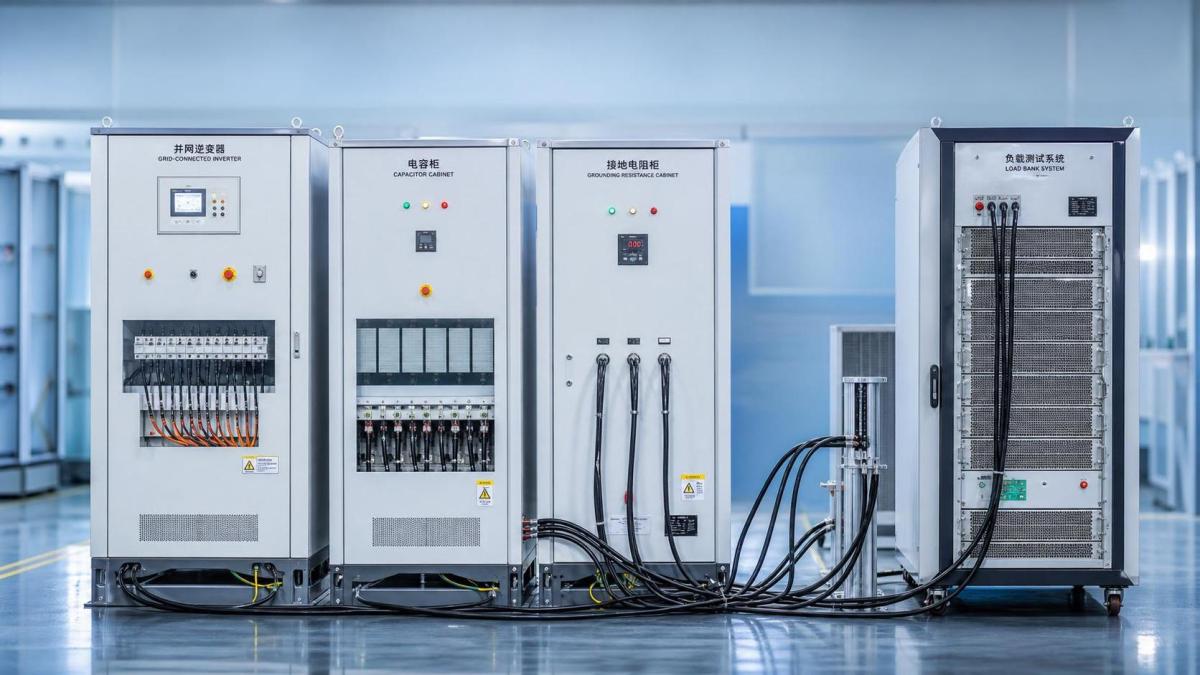
Grid-Connected Inverter purchasing in 2026 is no longer driven by capacity targets alone. The conversation is shifting toward efficiency under real operating conditions, compliance exposure, and retrofit timing.
That shift matters across the resistor and capacitor field. Inverters now sit closer to decisions about harmonic control, reactive power support, grounding protection, and staged load validation.
A few years ago, many projects could tolerate broader design margins. Today, grid operators, industrial users, and EPC teams are asking for tighter performance evidence and better behavior during disturbances.
This is why Grid-Connected Inverter trends in 2026 deserve attention beyond the inverter itself. They are influencing how capacitor banks are specified, how grounding resistor cabinets are evaluated, and how load banks are used during commissioning.
The strongest signals are coming from efficiency targets and grid-code enforcement
From recent project activity, two signals stand out. First, efficiency expectations are becoming more granular. Second, grid-code compliance is moving from document review to proof under operating stress.
For a Grid-Connected Inverter, peak efficiency figures are no longer enough. Operators want to know part-load behavior, thermal stability, switching losses, and response during voltage fluctuations.
This change is partly economic. Energy prices remain volatile, and wasted conversion losses accumulate quickly across utility, commercial, and industrial fleets.
It is also technical. Newer renewable-heavy grids require inverters to do more than inject power. They must help stabilize voltage, manage reactive power, and remain connected through defined disturbances.
The practical point is clear. Grid-Connected Inverter value is increasingly judged by how well the surrounding electrical system supports stable, verifiable, efficient operation.
Retrofit demand is rising because old balance-of-system assumptions are breaking down
Retrofit demand is becoming one of the most reliable market signals for 2026. Many installed systems were designed for earlier interconnection rules and less dynamic load behavior.
Now, a Grid-Connected Inverter often enters a site where capacitor aging, resistor drift, grounding limitations, or inadequate testing history already exist. The inverter upgrade then exposes system weaknesses.
This is especially common in industrial power systems, battery energy storage integration, and renewable retrofits. The inverter may be new, but the support infrastructure is not.
In actual deployment, the first bottleneck is often not semiconductor capability. It is whether the site can manage harmonics, transient response, heat rejection, and grounding faults without unstable behavior.
- Capacitor banks are being reassessed for reactive power regulation and harmonic conditions created by newer switching patterns.
- Grounding resistor cabinets are gaining attention where fault current control and protection coordination must meet updated standards.
- Resistive and electronic load banks are being used more often to validate inverter behavior before full site energization.
- Battery load testers are becoming more relevant where inverter upgrades are tied to storage integration and backup performance review.
For companies active in resistive and capacitive equipment, this creates a different opportunity profile. The demand is less about isolated components and more about coordinated electrical performance.
Why resistor and capacitor decisions are getting pulled into inverter strategy
A Grid-Connected Inverter does not operate in isolation. Its quality on paper can be undermined by poor grounding, weak reactive support, or inadequate commissioning under realistic load conditions.
That is why resistor and capacitor decisions are moving upstream. They are no longer treated only as accessory selections made late in project execution.
Capacitor banks, for example, affect voltage stability and power factor correction. When inverter dispatch becomes more dynamic, the sizing and switching logic of these banks matter more.
Grounding resistor cabinets shape fault behavior and protection response. As grid codes demand clearer ride-through and fault management performance, grounding design becomes harder to overlook.
Load banks play a different but equally important role. Portable load banks, rack mounted load banks, liquid cooling load banks, and electronics load banks help verify thermal response and staged loading before live operation.
This matters because 2026 projects are under pressure to shorten commissioning windows. Validation equipment that can reproduce realistic electrical stress has become part of risk control, not just a testing convenience.
The market is rewarding proof, not just specification sheets
Another visible change is the way buying decisions are being made. Grid-Connected Inverter suppliers increasingly face questions about measurable site performance rather than headline ratings.
In many tenders, the important discussion is not only conversion efficiency. It includes low-voltage ride-through, harmonic behavior, thermal limits, grounding coordination, and interaction with reactive compensation devices.
This affects the supporting equipment market in a direct way. Components tied to testing, protection, and compensation can now influence whether an inverter project is viewed as bankable and grid-ready.
For businesses evaluating investments, a useful distinction is emerging. High-value projects are prioritizing systems that can demonstrate compliance under realistic load and fault scenarios, not only under ideal laboratory conditions.
The signals worth watching through 2026
- More retrofit scopes attached to inverter replacement or storage expansion.
- Greater use of capacitor bank upgrades to handle reactive power and power quality demands.
- Higher testing expectations for load banks during factory acceptance and site commissioning.
- Stricter review of grounding resistor cabinet design where protection studies are being updated.
- Preference for suppliers that can support integrated electrical performance, not just single equipment categories.
A sensible response starts with system mapping, not rushed replacement
The most effective response to Grid-Connected Inverter trends in 2026 is rarely a simple equipment swap. The better starting point is to map the electrical system around the inverter.
That means checking where efficiency losses really occur, where compliance risk is concentrated, and which legacy components limit performance. In many cases, the answer sits outside the inverter enclosure.
A practical review usually includes capacitor health, resistor thermal margins, grounding architecture, and test capability for expected load profiles. It should also compare present conditions with likely 2026 grid-code expectations.
This approach aligns with how mature suppliers in the resistor and capacitor segment are already supporting projects. The value increasingly comes from matching load banks, capacitor banks, and grounding solutions to real inverter operating conditions.
For the next planning cycle, three actions stand out: review installed asset age, verify compliance-critical parameters under realistic stress, and prioritize retrofit packages that improve both efficiency and system resilience.
Grid-Connected Inverter demand will keep growing, but the stronger signal for 2026 is different. Growth is becoming more selective, more evidence-based, and more dependent on the quality of the resistor and capacitor ecosystem around each installation.




Please give us a message
