

Related content
- Oct 12, 2026Rack Mounted Load Bank Sizing for Data Center Rack Density and AirflowSize your Sunwin Rack Mounted Load Bank for data center rack density and airflow. Learn how voltage, load steps, and cooling capacity affect selection for reliable commissioning.
- Oct 07, 2026Sunwin Aerospace Power System Testing SolutionAn aerospace power system generates, stores, converts, regulates and distributes electrical energy, and is typically divided into primary power and secondary power. Secondary power converts primary power into another form or specification to meet the requirements of different onboard electrical equipment. As an essential support system, the aerospace power system provides safe and reliable energy for every subsystem of aircraft and spacecraft, and its development level plays a decisive role in improving aircraft performance and extending service life.
From 28Vdc, 270Vdc to 400Hz AC supplies, power quality directly affects the safe operation of onboard equipment. International aerospace power quality standards such as MIL-STD-704 and RTCA DO-160 impose strict requirements on voltage, frequency and transient characteristics. Therefore, comprehensive testing and evaluation of the power system under defined operating conditions is of great significance. - Oct 06, 2026Sunwin Advantages Technology, Products and Service — A Trusted Partner in Power TestingWith leading liquid-cooling technology, a complete product portfolio, precise real-working-condition simulation, one-stop solutions, international quality certification and a customer-first service philosophy, Sunwin will continue to safeguard the safety and reliability of power systems and AI computing infrastructure worldwide. Contact us and start a trustworthy partnership in power testing today.
- Oct 04, 2026Why Sunwin? Your Professional Partner in Power Testing & MeasurementQingdao Sunwin Technologies Co., Ltd. (Sunwin) is a professional enterprise dedicated to the R&D, manufacturing and service of intelligent power testing equipment. Built on load banks, Sunwin provides testing systems and intelligent test equipment for the generation, transmission, transformation, control and utilization of electrical energy.
A load bank is a power testing device that simulates real operating conditions (a dummy load). It reproduces the load characteristics of power equipment through resistive, inductive and other elements, enabling testing, adjustment, calibration and verification of generator sets, UPS, batteries and other power sources without connecting them to real loads. With advanced load testing technology, Sunwin helps customers scientifically verify the performance and reliability of power equipment, improve quality control and reduce safety accidents and economic losses caused by power failures.
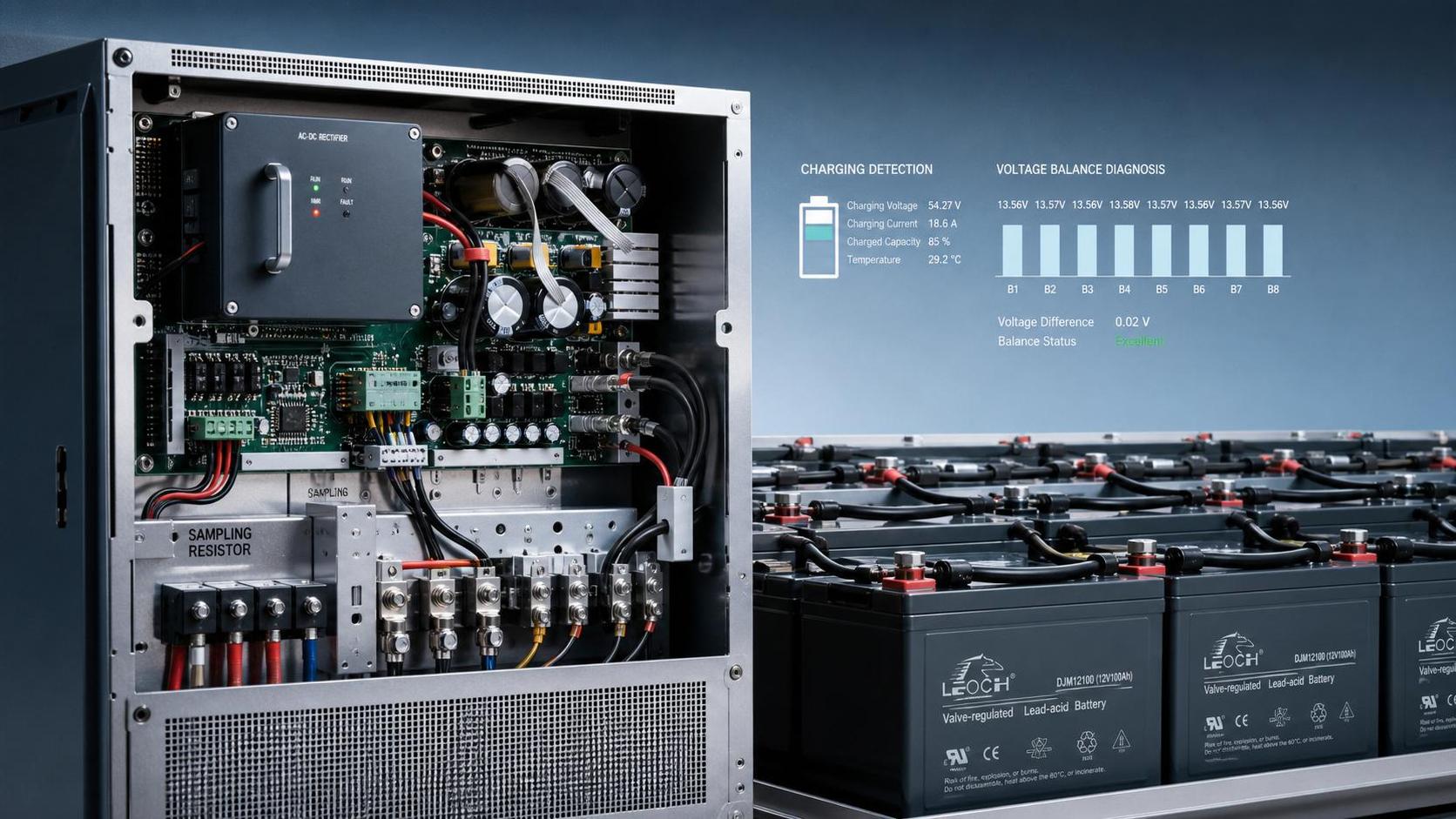
Why does a UPS Battery Charger suddenly become slow or uneven?
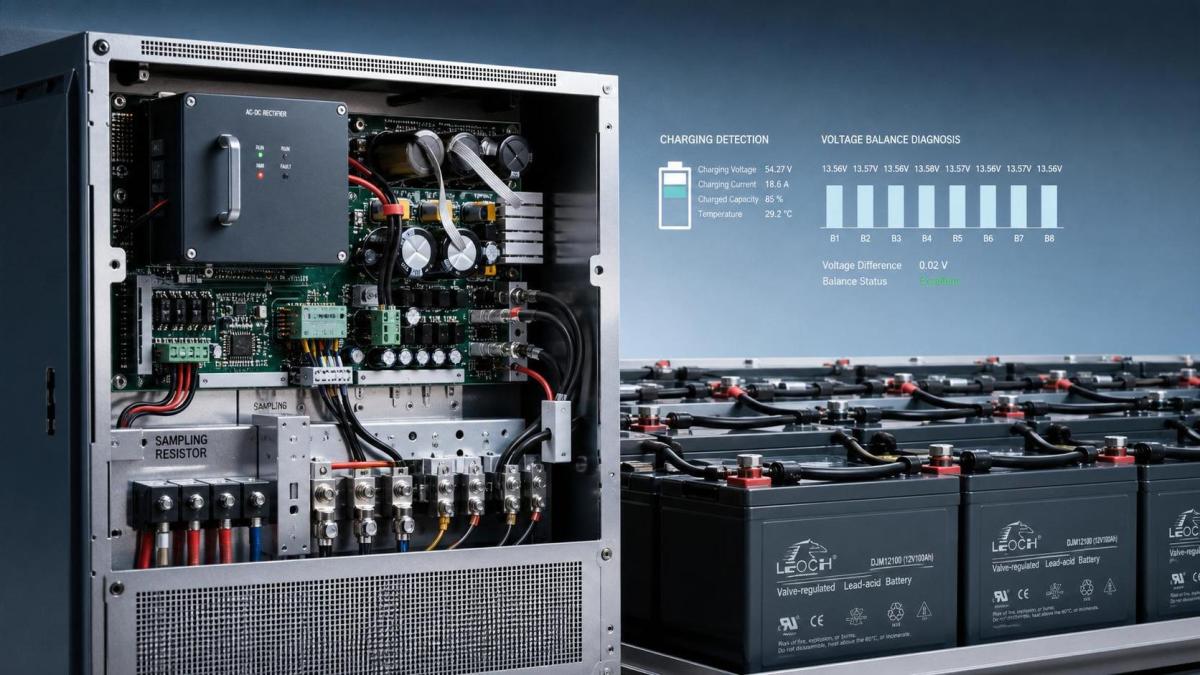
A UPS Battery Charger rarely fails without warning. Charging current usually drifts first, then batteries begin reaching different voltage levels.
That pattern matters because uneven charging shortens battery life, raises internal heat, and weakens backup performance during an outage.
In resistor and capacitor related power systems, charger stability depends on clean rectification, healthy filtering, correct resistance values, and balanced battery strings.
When the fault is left unchecked, the result is often deeper than a charger alarm. Capacity drops, runtimes become unpredictable, and maintenance cycles grow expensive.
The seven causes below appear most often in field troubleshooting. Some are inside the charger. Others come from the battery bank, load profile, or test method.
Which internal charger faults cause the biggest charging problems?
A slow UPS Battery Charger is often traced to aging power components. In practice, three internal faults appear again and again.
1. Rectifier or control board aging
If rectifier modules weaken, output current falls even when input power looks normal. The charger may still run, but charging time stretches noticeably.
Control boards can also misread battery condition. That leads to incorrect float or boost charging transitions, which makes one battery string lag behind another.
2. Filter capacitor degradation
Capacitors smooth ripple after rectification. When capacitance drops or ESR rises, DC output becomes noisy and unstable.
This is especially relevant in equipment linked to capacitor bank applications. Ripple can confuse charger regulation and accelerate battery heating during long recharge cycles.
3. Drifted sensing resistors or damaged current shunts
A UPS Battery Charger relies on precise resistance values to measure current and voltage. Once those components drift, the charger regulates against false data.
The charger may appear conservative, limiting current too early. Or it may overcharge one section while undercharging another.
More careful teams verify these conditions with calibrated meters and load simulation, rather than trusting the front panel alone.
Could the battery bank itself be the real reason?
Yes, and this is more common than many expect. A UPS Battery Charger can be healthy while the battery bank makes charging appear faulty.
4. Sulfation, high internal resistance, or mixed battery condition
Batteries with elevated internal resistance accept current differently. One block reaches terminal voltage quickly, while another stays undercharged.
That creates the classic uneven charging complaint. The charger reduces current because it sees a voltage ceiling, but the entire string is not truly recovered.
5. Loose connections, corroded terminals, or imbalance between strings
A small resistance increase at terminals creates measurable voltage drop under charge. The effect is easy to miss during visual inspection.
String imbalance is also frequent in parallel systems. One path takes more current, while another remains undercharged for weeks.
This is where a battery load tester becomes useful. It exposes weak units that static voltage readings often hide.
A table like this helps narrow the fault quickly, especially when charger and battery symptoms overlap.
Can load conditions and test methods distort UPS Battery Charger behavior?
Absolutely. Sometimes the charger is blamed for a problem created by the way the UPS is loaded, tested, or returned to service.
6. Continuous high load or incomplete recovery window
After discharge, the UPS Battery Charger needs stable time to restore the bank. If the system keeps facing repeated load events, the recharge cycle never finishes.
The charger then seems weak, when the real issue is operating duty. Portable load bank or rack mounted load bank testing often reveals this pattern.
7. Incorrect test setup or unverified charger settings
Charge current limits, temperature compensation, and battery type settings are sometimes changed during maintenance and never restored correctly.
A UPS Battery Charger set for the wrong battery chemistry will charge too slowly or stop at the wrong voltage threshold.
This is why controlled testing matters. Resistive load banks and electronics load banks help simulate repeatable conditions, so technicians can separate charger limits from system demand.
- Confirm charger mode, current limit, and temperature compensation before replacing hardware.
- Review recent discharge events and runtime logs.
- Check whether recharge was interrupted by load transfer tests or utility disturbances.
- Use controlled load equipment to compare expected and actual recovery time.
What is the fastest way to diagnose the fault without replacing parts blindly?
The most reliable approach is to move from measurement to isolation, not from alarm to replacement.
Start with charger output voltage, current, ripple, and temperature compensation status. Then compare each battery block and each parallel string.
In actual maintenance work, this order saves time because it separates charger faults from battery acceptance problems early.
A practical check sequence
- Verify AC input quality and charger alarm history.
- Measure DC output ripple to identify failing capacitors.
- Confirm current sensing accuracy and calibration records.
- Inspect terminal torque, cable heating, and corrosion.
- Run battery resistance or discharge testing on suspect strings.
- Use a controlled load profile to confirm recharge performance.
This method works well in sites using battery testers, resistive load banks, or liquid cooling load bank systems for higher capacity verification.
How can future UPS Battery Charger faults be reduced?
Prevention usually comes down to trending, not guesswork. A single voltage reading tells little. Trend data tells whether the UPS Battery Charger is drifting.
Build maintenance around ripple checks, battery resistance baselines, recharge time records, and periodic discharge verification.
Need attention to passive components as well. Capacitor wear and resistor drift are small faults at first, but they often trigger larger charging instability later.
Where systems support critical loads, combining charger checks with scheduled load bank testing gives a clearer picture of true recovery capability.
A grounding resistor cabinet, capacitor bank, and UPS environment also share one lesson: component health affects system balance long before a shutdown occurs.
If the UPS Battery Charger is charging slowly or unevenly, focus first on the seven causes above: control aging, capacitor degradation, sensing resistor drift, battery resistance growth, bad connections, load pressure, and wrong settings.
The next useful step is to document actual charging current, compare string behavior, and verify performance under a controlled test load. That usually reveals whether the fix belongs in the charger, the battery bank, or the operating process.


Please give us a message
