

Inquiry Now
News
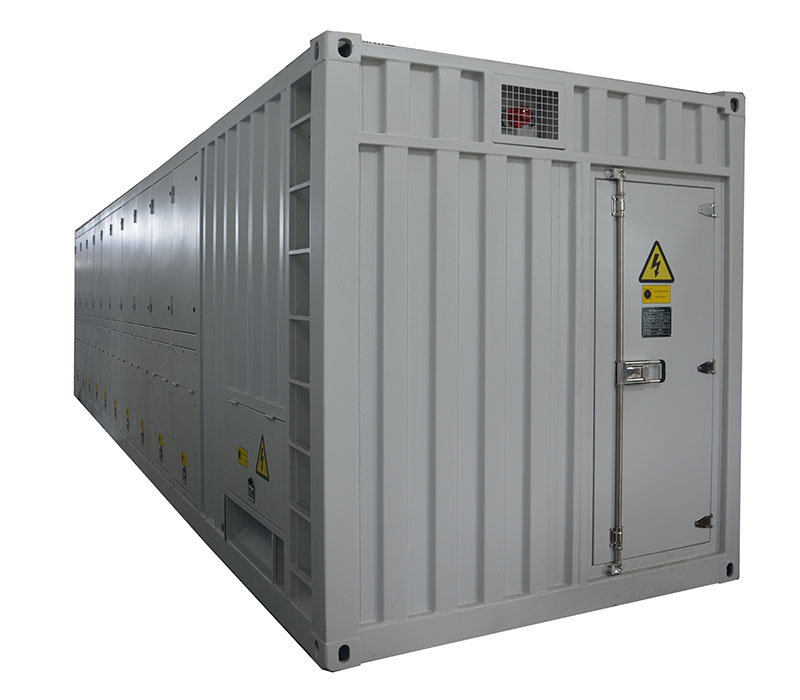
 Sunwin 1000KW Liquid-cooled Resistive Load BankJul 11, 2025Sunwin presents the 1000KW liquid-cooled resistive load bank, a pinnacle of precision power testing integrated with advanced cooling technology, designed for new energy, data centers, and beyond.View More ⇀
 Application of load banks in the field of new energy: How to improve the efficiency of energy storage system testing?Jun 27, 2025In the field of new energy, load banks can simulate the actual operating status of energy storage systems under different working conditions and conduct comprehensive tests on their performance. By reasonably selecting load banks, optimizing test processes, and combining intelligent technologies, the test efficiency of energy storage systems can be effectively improved, as follows:View More ⇀
 About Sunwin LoadJun 24, 2025Sunwin Load, is a professional enterprise focusing on the research and development, manufacturing and service of intelligent power supply test equipment. With load banks as the core, the company provides test systems and intelligent detection equipment for the generation, transmission, transformation, control and use of electric energy.View More ⇀
 Sunwin Charging Pile 3C Testing EquipmentJun 20, 2025In the key link of charging pile quality inspection, the charging pile 3C testing equipment developed by Sunwin stands out with its outstanding functional features, providing a solid guarantee for the performance evaluation and quality control of charging piles.
1. High-precision parameter measurement: Equipped with advanced high-precision sensors, the voltage measurement accuracy can reach ±0.05%, and the current measurement accuracy can reach ±0.1%, which can accurately capture the slight changes in the electrical parameters of the charging pile. When testing a charging pile with an output voltage of 220V, the equipment can detect a voltage deviation of 0.11V; for a charging pile with an output current of 32A, the measurement error can be controlled within ±0.032A, providing a reliable data basis for the performance evaluation of the charging pile.View More ⇀ How does intelligent control technology improve the efficiency and performance of load banks?Jun 18, 2025
• Accurate load regulation: Intelligent control technology uses advanced algorithms, such as PID control algorithms, to accurately adjust the load according to the set value. Whether it is resistive, inductive or capacitive load, it can quickly and stably reach the preset load level, avoiding the over-adjustment or under-adjustment that may occur in traditional manual adjustment methods, thereby improving the accuracy and efficiency of the test. For example, when testing power supply equipment under different load conditions, the intelligent load bank can accurately adjust the load size according to the preset load change curve, simulate various load conditions in actual applications, and provide accurate data support for the performance evaluation of power supply equipment.View More ⇀ Sunwin DC Charging Pile Test Device The new energy electric vehicle DC charging pile comprehensive test device is the core product of Sunwin in the field of DC charging pile testing. It, together with the three-phase programmable AC power supply and loadJun 14, 2025The new energy electric vehicle DC charging pile comprehensive test device is the core product of Sunwin in the field of DC charging pile testing. It, together with the three-phase programmable AC power supply and load bank, constitutes the test system of the DC charger, which fully meets the test requirements of the DC charging pile.View More ⇀
 Sunwin 1000KW Resistive Load BankJun 10, 2025In the field of power equipment detection, precision and stability are eternal pursuits. Sunwin 1000KW resistive load bank, with excellent performance, innovative technology and reliable quality, brings you an unprecedented power detection experience and meets the diverse high-power detection needs!View More ⇀
 Sunwin AC Charging Pile Test DeviceJun 06, 2025Sunwin's AC charging pile test devices, such as the WN1000 series, are designed and manufactured in strict accordance with the national standards GB/T18487.1 - 2015 and GB/T 20234.2 - 2015. They have excellent performance and comprehensive functions, providing reliable guarantees for the quality inspection of AC charging piles.View More ⇀
 Application of load banks in shipyardsMay 28, 2025In shipyards, the application of load banks runs through multiple links of ship power system construction and testing, which is crucial to ensure the safe and stable operation of ships, which is specifically reflected in the following aspects:View More ⇀
 Future Development Trend Of Programmable Load BankMay 23, 2025
(I) Intelligent development
With the continuous development of technologies such as artificial intelligence and the Internet of Things, programmable AC and DC load banks will move towards intelligence. Future load banks will have functions such as intelligent diagnosis, automatic calibration, and remote monitoring. They will be able to automatically analyze the status of equipment based on test data, predict potential faults, and realize remote operation and management, thereby improving test efficiency and management level.View More ⇀


{item.title}
{item.publish_time}
{item.description}
View More ⇀
Please give us a message
