

Related content
- Oct 07, 2026Sunwin Aerospace Power System Testing SolutionAn aerospace power system generates, stores, converts, regulates and distributes electrical energy, and is typically divided into primary power and secondary power. Secondary power converts primary power into another form or specification to meet the requirements of different onboard electrical equipment. As an essential support system, the aerospace power system provides safe and reliable energy for every subsystem of aircraft and spacecraft, and its development level plays a decisive role in improving aircraft performance and extending service life.
From 28Vdc, 270Vdc to 400Hz AC supplies, power quality directly affects the safe operation of onboard equipment. International aerospace power quality standards such as MIL-STD-704 and RTCA DO-160 impose strict requirements on voltage, frequency and transient characteristics. Therefore, comprehensive testing and evaluation of the power system under defined operating conditions is of great significance. - Oct 06, 2026Sunwin Advantages Technology, Products and Service — A Trusted Partner in Power TestingWith leading liquid-cooling technology, a complete product portfolio, precise real-working-condition simulation, one-stop solutions, international quality certification and a customer-first service philosophy, Sunwin will continue to safeguard the safety and reliability of power systems and AI computing infrastructure worldwide. Contact us and start a trustworthy partnership in power testing today.
- Oct 04, 2026Why Sunwin? Your Professional Partner in Power Testing & MeasurementQingdao Sunwin Technologies Co., Ltd. (Sunwin) is a professional enterprise dedicated to the R&D, manufacturing and service of intelligent power testing equipment. Built on load banks, Sunwin provides testing systems and intelligent test equipment for the generation, transmission, transformation, control and utilization of electrical energy.
A load bank is a power testing device that simulates real operating conditions (a dummy load). It reproduces the load characteristics of power equipment through resistive, inductive and other elements, enabling testing, adjustment, calibration and verification of generator sets, UPS, batteries and other power sources without connecting them to real loads. With advanced load testing technology, Sunwin helps customers scientifically verify the performance and reliability of power equipment, improve quality control and reduce safety accidents and economic losses caused by power failures. - Oct 03, 2026Sunwin WN-6000L 6000kVA Resistive-Inductive Load BankThe Sunwin WN-6000L is a 6000kVA high-power resistive-inductive (R/L) load bank developed by Qingdao Sunwin Technologies Co., Ltd. (Sunwin). Designed for generator load bank testing, UPS load bank testing, data center load testing and power-system tests, it delivers controlled active and lagging reactive loading to fully meet high-power equipment load-verification requirements.
Built on the core principle of "resistive-inductive integration", the WN-6000L combines 4800kW active load with 3600kVar inductive reactive load at 0.8 lagging power factor, accurately reproducing the real operating conditions of generator sets and UPS systems. It helps customers fully verify load capacity and reliability during factory acceptance, grid-connection testing and routine maintenance.
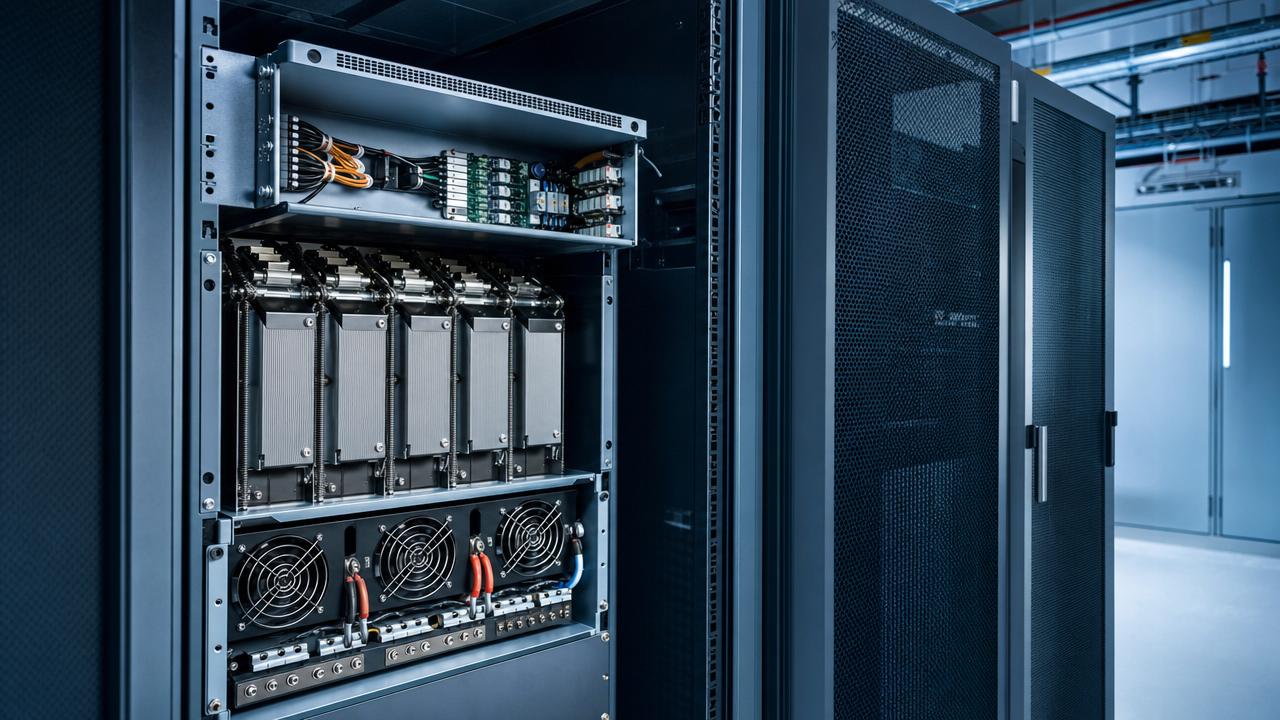
Choosing the right Rack Mounted Load Bank is becoming more important as backup power systems support denser IT rooms, telecom nodes, medical sites, and industrial controls.
Testing is no longer a box-checking exercise. It now affects uptime, compliance, energy planning, and the real confidence level behind emergency power performance.
A well-matched Rack Mounted Load Bank helps reveal weak generators, unstable UPS output, poor transfer behavior, and hidden thermal issues before an outage exposes them.
In the resistor and capacitor field, selection also connects directly to resistor element stability, control circuitry accuracy, heat dissipation, and integration with monitored test environments.
Backup power testing is shifting from basic loading to evidence-driven validation
The demand for a Rack Mounted Load Bank has changed with the wider use of modular UPS systems, compact generator rooms, and edge computing installations.
Older test plans often focused only on rated kilowatt loading. Current practice requires more precise step control, better data capture, and safer operation in tighter spaces.
Facilities now expect repeatable test records. They also need support for commissioning, periodic maintenance, battery discharge checks, and system expansion verification.
That is why the best Rack Mounted Load Bank is not simply the highest power model. It is the model that matches electrical reality, installation limits, and test objectives.
Several trend signals now define how a Rack Mounted Load Bank should be selected
Selection criteria are tightening because backup power environments have become more compact, more digital, and more sensitive to disturbance.
- Higher rack density increases heat concentration during testing.
- More electronic loads require finer resistive load steps.
- Compliance reviews now expect logged, traceable test results.
- Remote monitoring has become standard in many facilities.
- Maintenance windows are shorter, so setup must be faster.
- Safety expectations are rising for airflow, touch protection, and fault alarms.
These signals push buyers toward smarter Rack Mounted Load Bank configurations with accurate control, stable resistor performance, and practical communication interfaces.
The strongest drivers come from electrical accuracy, thermal control, and digital visibility
A Rack Mounted Load Bank must perform as an electrical test instrument, not only as a power dissipation device.
In many applications, resistor selection is the hidden differentiator. Stable resistive elements improve consistency under changing temperatures and repeated duty cycles.
Control boards and capacitor-supported filtering can also affect switching smoothness, measurement stability, and response during stepped load transitions.
A mismatch in load profile can distort backup power test conclusions
Not every Rack Mounted Load Bank fits every backup power scenario. The correct load profile depends on what the test is meant to prove.
For generator verification
Focus on total kilowatt capacity, step loading behavior, continuous operation time, and cooling endurance. Stable resistive loading is often the main requirement.
For UPS and inverter systems
Pay closer attention to voltage range, phase balance, low-load resolution, and communication integration. Finer steps help identify output regulation issues.
For battery discharge testing
Confirm whether the Rack Mounted Load Bank supports battery load testing logic, discharge curves, cutoff protection, and data capture over long test periods.
If the test target is runtime, a poorly matched Rack Mounted Load Bank may create unrealistic stress and misleading pass results.
Installation constraints now influence selection almost as much as electrical ratings
Modern facilities often have limited space, controlled airflow, and strict access rules. Because of this, form factor is a strategic factor.
- Check rack height and depth before comparing power ratings.
- Review front-to-back or side airflow requirements carefully.
- Confirm cable entry direction and terminal accessibility.
- Evaluate site noise limits if tests happen near occupied rooms.
- Consider service access for fans, filters, and resistor modules.
A compact Rack Mounted Load Bank with poor ventilation can create thermal stress for both the load bank and adjacent equipment.
This is especially important in resistor-intensive systems, where heat rejection quality directly affects stability and usable duty cycle.
Control precision and monitoring capability are becoming decisive buying factors
The value of a Rack Mounted Load Bank increases sharply when operators can see, record, and compare every test condition.
Basic manual switching may still work for simple tasks. However, trend direction clearly favors digital control and integrated reporting.
- Step resolution should match expected test granularity.
- Real-time voltage, current, and power display improves confidence.
- Temperature and airflow alarms reduce operational risk.
- Remote interfaces simplify scheduled or supervised tests.
- Downloadable logs support audit and maintenance records.
When comparing models, ask whether the Rack Mounted Load Bank can support your testing workflow three years from now, not only today.
The impact extends across system reliability, maintenance rhythm, and compliance confidence
A correctly specified Rack Mounted Load Bank improves more than one test event. It supports long-term reliability management.
Accurate loading exposes underperforming generators earlier. Consistent discharge testing reveals battery aging trends before failure risk becomes critical.
Better monitoring also reduces disputes around test interpretation. That matters when maintenance records are reviewed against internal standards or external compliance expectations.
In environments using both resistor and capacitor equipment, coordinated test visibility helps diagnose power quality behavior during switching, recovery, and runtime decline.
The best evaluation approach is to score a Rack Mounted Load Bank against practical checkpoints
What deserves the closest attention before making a final decision
- Do not size only for nameplate load. Include test margin.
- Match the Rack Mounted Load Bank to duty cycle, not just peak power.
- Verify resistor element durability for repeated thermal cycling.
- Check communication protocols if remote monitoring is planned.
- Review rack integration, ventilation, and cable routing in advance.
- Ask for alarm logic, protection response, and maintenance requirements.
A short specification review now can prevent test delays, overheating problems, and misleading backup power conclusions later.
A practical next step is to compare real test conditions against equipment capability
Start with your actual backup system data, not a general catalog range. List voltage, phase, target load, runtime, cooling limits, and reporting needs.
Then compare each requirement against the proposed Rack Mounted Load Bank, including resistor design, control precision, and protection functions.
Sunwin focuses on resistive load bank, Rack Mounted Load Bank, electronics load bank, liquid cooling load bank, portable load bank, battery load tester, grounding resistor cabinet, and capacitor bank solutions.
If your backup power tests require a dependable Rack Mounted Load Bank, the most effective move is to evaluate a configuration built around your real operating profile.


Please give us a message
