

Related content
- Oct 12, 2026Rack Mounted Load Bank Sizing for Data Center Rack Density and AirflowSize your Sunwin Rack Mounted Load Bank for data center rack density and airflow. Learn how voltage, load steps, and cooling capacity affect selection for reliable commissioning.
- Oct 07, 2026Sunwin Aerospace Power System Testing SolutionAn aerospace power system generates, stores, converts, regulates and distributes electrical energy, and is typically divided into primary power and secondary power. Secondary power converts primary power into another form or specification to meet the requirements of different onboard electrical equipment. As an essential support system, the aerospace power system provides safe and reliable energy for every subsystem of aircraft and spacecraft, and its development level plays a decisive role in improving aircraft performance and extending service life.
From 28Vdc, 270Vdc to 400Hz AC supplies, power quality directly affects the safe operation of onboard equipment. International aerospace power quality standards such as MIL-STD-704 and RTCA DO-160 impose strict requirements on voltage, frequency and transient characteristics. Therefore, comprehensive testing and evaluation of the power system under defined operating conditions is of great significance. - Oct 06, 2026Sunwin Advantages Technology, Products and Service — A Trusted Partner in Power TestingWith leading liquid-cooling technology, a complete product portfolio, precise real-working-condition simulation, one-stop solutions, international quality certification and a customer-first service philosophy, Sunwin will continue to safeguard the safety and reliability of power systems and AI computing infrastructure worldwide. Contact us and start a trustworthy partnership in power testing today.
- Oct 04, 2026Why Sunwin? Your Professional Partner in Power Testing & MeasurementQingdao Sunwin Technologies Co., Ltd. (Sunwin) is a professional enterprise dedicated to the R&D, manufacturing and service of intelligent power testing equipment. Built on load banks, Sunwin provides testing systems and intelligent test equipment for the generation, transmission, transformation, control and utilization of electrical energy.
A load bank is a power testing device that simulates real operating conditions (a dummy load). It reproduces the load characteristics of power equipment through resistive, inductive and other elements, enabling testing, adjustment, calibration and verification of generator sets, UPS, batteries and other power sources without connecting them to real loads. With advanced load testing technology, Sunwin helps customers scientifically verify the performance and reliability of power equipment, improve quality control and reduce safety accidents and economic losses caused by power failures.
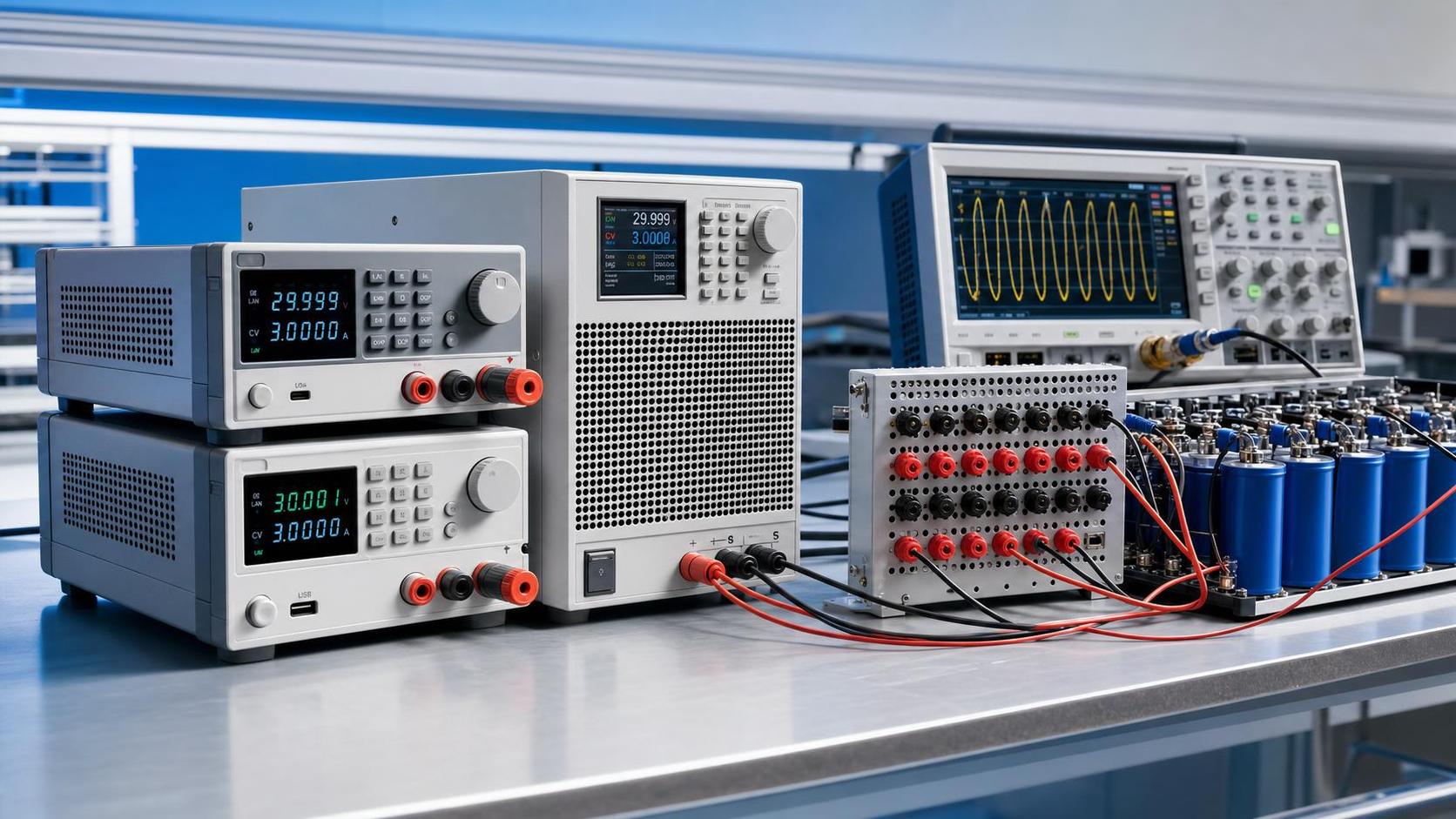
In lab testing, the choice between a Programmable Power Supply and a fixed output source shapes more than basic power delivery. It affects how accurately conditions can be reproduced, how quickly test cycles can change, and how confidently results can be compared across resistive and capacitive applications.
That matters in environments where load behavior is rarely static. A resistor bank, capacitor bank, battery load tester, or grounding resistor cabinet may face different voltages, current ramps, transient events, and thermal limits during evaluation.
For this reason, the discussion is not simply about which source is more advanced. It is about which one better matches the test objective, the expected operating profile, and the level of control needed for reliable validation.
Why the power source matters in resistor and capacitor testing
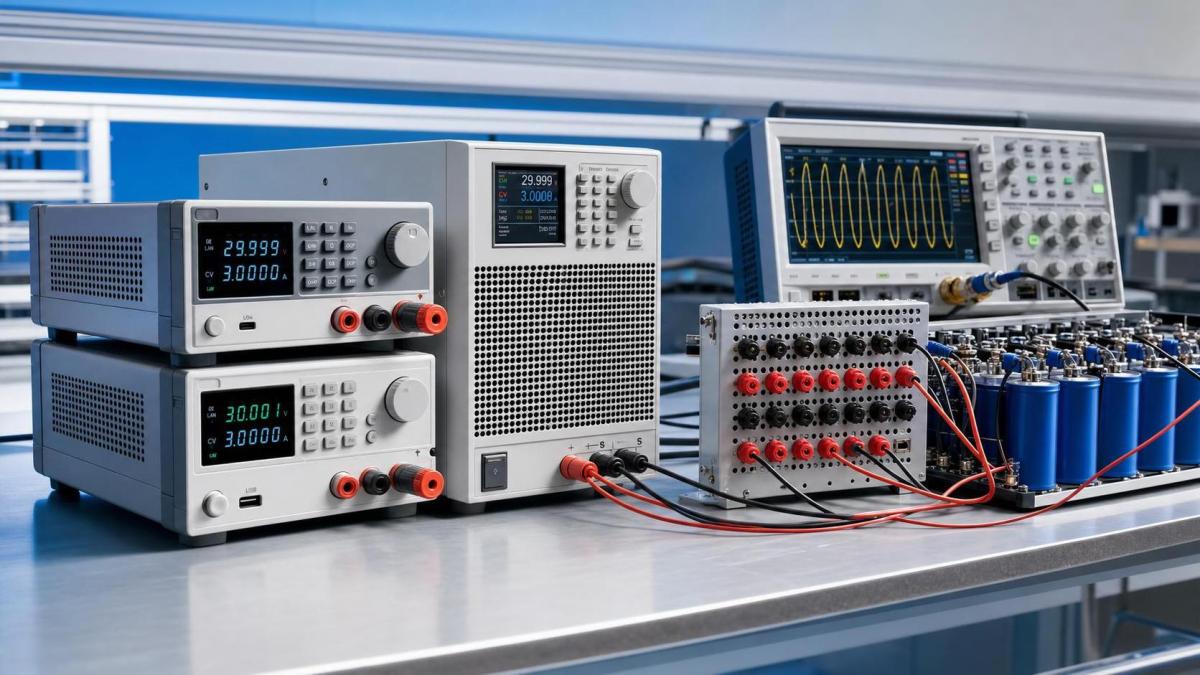
Resistive and capacitive systems respond differently under load. A fixed output source can supply a stable condition, but many laboratory checks require more than one operating point.
A Programmable Power Supply allows voltage, current, timing, and protection settings to be adjusted with precision. That flexibility becomes important when a test must simulate startup behavior, charge and discharge curves, or controlled overload conditions.
In practical terms, this means the source becomes part of the measurement method. If the source cannot reflect the real duty cycle, the test result may look clean while missing actual field behavior.
This issue appears often when validating capacitor banks, electronics load banks, or battery-related systems. A stable source may be enough for one checkpoint, yet insufficient for a full assessment.
Understanding the difference beyond simple output
A fixed output source is built to deliver one defined voltage or current level with limited adjustment. Its main strengths are simplicity, predictable operation, and lower control complexity.
A Programmable Power Supply is designed for controlled variation. It can usually support multiple setpoints, sequencing, remote control, protection thresholds, and data integration.
That difference changes how a lab works. One source supports repeated static checks. The other supports dynamic profiles, comparison runs, and automated test routines.
Where fixed output still makes sense
Fixed output remains useful when the device under test operates at one narrow condition. It also fits incoming inspection, pass or fail screening, and basic endurance checks.
If a resistor assembly only needs verification at a standard rated input, extra programmability may add little value. In that case, a simpler source can reduce setup time.
Where programmability changes the result
When tests involve changing loads, surge sensitivity, thermal response, or multiple standards, a Programmable Power Supply usually performs better. It lets the lab move from assumption to simulation.
This is especially relevant for capacitor charging behavior, battery discharge studies, and load bank verification under stepped or ramped power conditions.
Current industry focus: repeatability, traceability, and realistic simulation
Testing standards are not necessarily becoming more complicated, but evaluation expectations are getting tighter. Labs are expected to produce repeatable results under conditions that resemble actual operation.
That pushes attention toward sources that can reproduce the same waveform, current limit, and timing sequence across multiple runs. A Programmable Power Supply supports this with stored profiles and digital control.
Another trend is system-level validation. Instead of checking a resistor or capacitor in isolation, many facilities now test assemblies, cabinets, and integrated load handling equipment.
In that environment, products such as rack mounted load banks, portable load banks, liquid cooling load banks, and capacitor banks are evaluated against wider performance windows. The power source needs to keep pace.
Typical lab scenarios and what each option supports
The better choice depends on the test path, not on a general preference for advanced equipment. Several common scenarios make this easier to judge.
Resistive load verification
For static resistance confirmation or rated power checks, a fixed output source can be efficient. The procedure stays straightforward, and stability is often enough.
For staged loading, temperature rise mapping, or repeated profile testing, a Programmable Power Supply adds control that a fixed source usually cannot match.
Capacitor bank behavior
Capacitor testing often demands controlled charging rates, current limiting, and sequence timing. These needs strongly favor a Programmable Power Supply.
A fixed output source may handle a simple charge test, but it is less suited for studying inrush control, discharge repetition, or stress margins.
Battery load and hybrid systems
Battery load testers and associated resistor-capacitor paths usually require changing demand patterns. A programmable source can synchronize more naturally with those workflows.
That becomes important when comparing nominal behavior with edge conditions, especially where charge acceptance and protection logic interact.
Large load bank assemblies
In load bank manufacturing, including resistive load bank, electronics load bank, and liquid cooling load bank production, verification often spans multiple power levels and thermal states.
A Programmable Power Supply helps maintain one repeatable method across those steps. That consistency becomes more valuable as product range expands.
What to check before deciding
The choice should be tied to the test plan, not just the equipment catalog. Several factors usually separate a good fit from an expensive mismatch.
- How many operating points must be tested in one sequence.
- Whether voltage or current needs to ramp, pulse, or switch automatically.
- How sensitive the device is to inrush, overshoot, and timing control.
- Whether results must be logged, repeated, and compared across batches.
- How often the same setup will be reused for different resistor or capacitor products.
- What protection functions are required during abnormal testing.
A fixed output solution usually works best when most answers point toward one stable condition. A Programmable Power Supply becomes more compelling when variation is part of the test itself.
How this applies to equipment selection in practice
Companies working across resistor and capacitor products often face a mixed portfolio. One lab may need to assess grounding resistor cabinets, capacitor banks, and portable load banks under different operating assumptions.
In that setting, a Programmable Power Supply can reduce the number of separate setups. Instead of matching each product to a narrowly defined source, the lab builds repeatable profiles around key parameters.
This does not mean fixed output sources lose value. They remain practical in stations dedicated to routine checks, standardized verification, or high-volume confirmation at one rating.
The more varied the portfolio, the stronger the case for programmable control. That is one reason manufacturers with broad load and resistance-related product lines often benefit from flexible test architecture.
Sunwin’s focus on resistive load banks, rack mounted load banks, electronics load banks, liquid cooling load banks, portable load banks, battery load testers, grounding resistor cabinets, and capacitor banks reflects exactly this kind of diversified testing reality.
A practical way to move forward
The better option is usually clear once the test environment is mapped honestly. If the lab mainly confirms one rated condition, fixed output can stay efficient and dependable.
If the work includes profile changes, transient behavior, automation, or cross-product validation, a Programmable Power Supply is generally the stronger fit for lab testing.
A useful next step is to list the real operating states that must be simulated, then compare them against source control features, protection options, and repeatability needs.
That approach gives a more reliable basis for equipment selection than comparing output ratings alone, especially in resistor and capacitor applications where test quality depends on how closely the power source mirrors reality.


Please give us a message
