

Related content
- Aug 19, 2026Why DC Load Bank Test Results Drift: Common Causes and Practical FixesSunwin DC Load Bank test results drifting? Learn the most common causes—measurement errors, loose connections, thermal issues, and calibration drift—plus practical fixes to improve accuracy.
- Aug 17, 2026Rack Mounted Load Bank Design Considerations for High-Density Test EnvironmentsSunwin Rack Mounted Load Bank design tips for high-density test environments—learn how to improve power density, cooling, safety, and serviceability for reliable deployment.
- Aug 11, 2026Resistive Load Bank Safety Risks Often Missed During Routine TestingSunwin Resistive Load Bank safety risks often hide in routine testing. Discover missed hazards, practical controls, and smarter checks to prevent overheating, faults, and costly downtime.
- Aug 12, 2025Capacitor Bank vs. Traditional Power Solutions: Which Wins?Discover why Capacitor Banks outperform traditional power solutions in efficiency, cost, and reliability for industries like data centers and power grids.
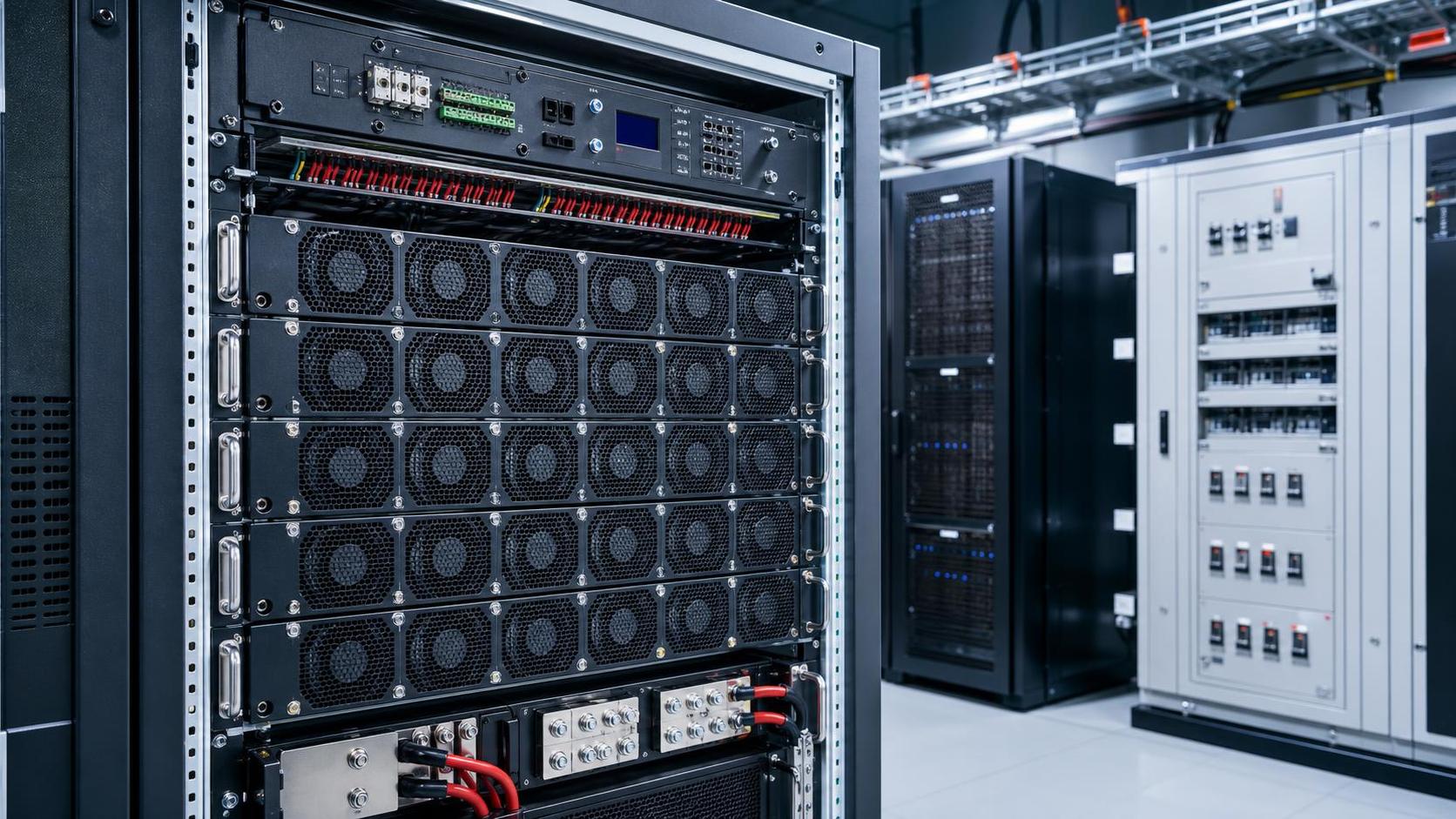
For technical evaluators planning high-density test environments, a Rack Mounted Load Bank must balance power density, thermal management, safety, and serviceability without compromising rack integration. This article examines the key design considerations that impact performance, reliability, and ease of deployment, helping you assess the right solution for demanding test applications.
Why rack-mounted designs are being used more often
In many test labs, telecom rooms, data center validation spaces, and power electronics environments, floor space is already committed before a load test even begins. That is where rack mounting becomes more than a packaging choice. It is a way to place test capability close to the equipment under validation, reduce cable runs, and keep the test setup aligned with existing infrastructure.
The appeal is straightforward: a rack-mounted unit can be integrated into the same mechanical and electrical ecosystem as servers, UPS modules, battery systems, DC distribution panels, or inverter test benches. But the rack format also introduces constraints that are easy to underestimate. A load bank that performs well on paper can fail in practice if airflow is poor, heat rejection is not matched to rack conditions, or maintenance access becomes impractical once installed.
For evaluators, the real question is not whether a Rack Mounted Load Bank fits in a rack. It is whether it can deliver repeatable load performance under continuous thermal stress while remaining safe, accessible, and compatible with the test environment.
Power density is useful only when the rack can support it
High-density test environments usually push for as much load capacity as possible per rack unit. That pressure makes sense, but power density should never be evaluated in isolation. The true bottleneck is often the rack’s ability to remove heat and support cable routing, breaker protection, and airflow separation.
A dense resistive load bank generates heat by design, and that heat must be managed in a predictable path. If the airflow path is obstructed, the unit may derate early, trigger thermal protection, or create hot spots that shorten component life. The evaluator should look beyond nameplate power and ask how the rated capacity is derived: at what inlet temperature, with what airflow rate, and under what duty cycle.
One common mistake is to compare models only by kW per U. That metric is useful, but incomplete. A more meaningful comparison includes usable continuous power, maximum allowed inlet temperature, fan redundancy, and whether the unit can maintain output without requiring the rack itself to be heavily modified.
Thermal design is usually the deciding factor
In a Rack Mounted Load Bank, thermal design is not a supporting feature; it is the core of the product. The resistive elements, control electronics, internal wiring, fans, and connectors all contribute to the heat profile. If any one of those elements becomes the weak link, the full system loses reliability.
Airflow direction matters. In mixed rack environments, front-to-rear cooling is often preferred because it aligns with common rack standards and simplifies integration. Even so, compatibility with the surrounding equipment must be checked carefully. A load bank that exhausts warm air into the intake of nearby sensitive electronics can create a hidden system-level issue even if the load bank itself is operating within specification.
Evaluators should also examine whether the design accounts for local thermal gradients. High-power elements placed too close to temperature-sensitive components can reduce service life. Thermal sensors should be positioned where they can detect real stress conditions, not only average internal temperature.
In practice, the best designs do not simply “cool the unit.” They keep the load profile stable under repeated cycling, partial loading, and varying ambient conditions. That is especially important in validation environments where test results must be reproducible.
Rack integration is a mechanical and operational issue
Mechanical fit is often treated as a checklist item, but rack integration affects daily usability. Weight distribution, rail strength, front-panel access, and cable bend radius all influence whether the equipment is practical in a real lab or test room.
Heavy units mounted in the upper part of a rack can create handling risks and structural concerns. A practical design should support stable installation without requiring awkward lifting or frequent removal of neighboring equipment. If maintenance requires extracting the full unit from the rack, the labor impact becomes significant over time.
Front-access controls are useful, but only if they remain visible and usable once the unit is installed. Likewise, rear connections should not force excessive cable strain or block exhaust paths. In dense environments, the physical location of power terminals can determine whether the system is maintainable or merely installable.
For this reason, technical evaluators should review not just rack units and dimensions, but the entire service envelope: how the unit is mounted, how airflow is preserved, how cables are routed, and how a technician reaches critical components during inspection or replacement.
Control accuracy matters more than many buyers expect
Load banks are often discussed as if their only job is to consume power, but testing environments usually need controlled and repeatable loading. That means step resolution, response time, and stability matter. If the control system introduces large jumps, poor repeatability, or delayed switching, the test data becomes less useful.
This is especially important where the Rack Mounted Load Bank is used for power supply validation, UPS burn-in, battery discharge testing, or inverter characterization. In those applications, the test objective is often not just “can it handle the load” but “how does the source behave under controlled and repeatable stress.”
Technical evaluators should check whether the load steps are fixed or programmable, whether control is local or remote, and whether the actual switching behavior matches the intended test profile. A design that looks adequate in a specification sheet may still produce poor test fidelity if the control granularity is too coarse.
Protection features should match the risk profile of the test environment
Safety design in rack-mounted equipment is not only about preventing catastrophic failure. It is also about limiting nuisance trips, containing fault propagation, and allowing operators to respond quickly when conditions change.
Important items include overtemperature protection, fan failure detection, input overcurrent protection, proper grounding, and clear indication of fault states. In high-density racks, fault visibility is especially important because one failing unit can affect nearby equipment if the thermal or electrical environment is tightly packed.
It is worth checking whether protection is implemented at the unit level or assumed to be managed by external infrastructure. A robust load bank should not rely on ideal site conditions to stay safe. It should behave predictably when airflow is reduced, ambient temperature rises, or the source under test behaves abnormally.
In environments where battery systems or DC power sources are tested, polarity handling, connector integrity, and discharge control become even more important. The protection concept needs to match the actual use case, not just the generic product category.
Serviceability is often underestimated during procurement
At the specification stage, service access may seem secondary. After deployment, it becomes one of the most important practical issues. Fans wear out, terminals need inspection, dust accumulates, and control boards may require replacement. If servicing the unit means taking the entire rack offline, the operational cost rises quickly.
Good serviceability usually shows up in small design choices: modular fan replacement, accessible filter paths, clearly labeled wiring, field-replaceable protection devices, and component layouts that allow diagnosis without dismantling the full system. These details are rarely prominent in marketing materials, but they are often what determine real uptime.
For test labs with limited maintenance windows, the ability to inspect or replace parts from the front side of the rack can be a major advantage. In some cases, a slightly lower power density is justified if it avoids repeated downtime and improves long-term availability.
Environmental assumptions should be verified, not accepted
Many load bank specifications are written around a set of standard assumptions that may not reflect the real site. Ambient temperature, altitude, humidity, dust level, and rack airflow all affect performance. If those parameters are not checked early, the selected system may need derating or modification after installation.
This matters most in high-density environments because multiple heat-generating devices already share the same air volume. A rack-mounted load bank may be technically compliant in isolation but still struggle when installed beside other thermal loads. The evaluator should ask how the unit performs in worst-case ambient conditions, not only in ideal lab conditions.
Where the environment is unstable or ventilation is constrained, additional thermal margin is usually worth more than a higher nameplate rating. In practice, a conservative design often delivers better uptime and less maintenance than an aggressively packed one.
Electrical interface details can make or break deployment
The electrical side of a Rack Mounted Load Bank deserves the same attention as the thermal side. Input voltage range, current rating, connector type, protection coordination, and grounding method all affect deployment speed and operational safety.
Mismatch here creates avoidable delays. If the rack is built for one electrical architecture and the load bank expects another, the project may require adapter hardware, additional distribution, or rework of the test bench. That is especially common in mixed-voltage environments where AC and DC testing coexist.
Clear labeling and robust terminal design are not minor details. In dense racks, technician error becomes more likely when wiring is crowded or access is limited. The better the electrical interface is designed, the lower the risk of misconnection and the easier it is to reproduce test setups across multiple sites.
Compliance and standards need context, not just a badge
For technical evaluators, compliance claims should be interpreted carefully. A declaration of conformity may be meaningful, but only if it corresponds to the actual deployment region, voltage class, and safety environment. Depending on the market, buyers may need to confirm alignment with relevant electrical safety and EMC requirements. Exact standard applicability should be verified for the intended application and jurisdiction, rather than assumed from a brochure.
What matters most is not the presence of a certificate alone, but whether the product’s design, documentation, and testing support the site’s regulatory obligations. If the load bank is going into a customer lab, a telecom facility, or an export project, documentation quality can be as important as technical performance.
Evaluators should request clear manuals, wiring diagrams, fault procedures, and maintenance guidance. A technically strong design becomes much easier to approve when the documentation supports safe integration and consistent operation.
Choosing the right design means matching the load bank to the test philosophy
The best Rack Mounted Load Bank is not necessarily the one with the highest rating or the most compact footprint. It is the one that matches how the environment actually operates. If the test program requires long-duration load runs, thermal stability may matter more than absolute density. If the lab changes test profiles frequently, control flexibility and service access may matter more than raw power.
For evaluators, a useful decision framework is simple: confirm the expected power profile, verify thermal headroom, check installation constraints, review protection behavior, and assess maintenance impact. If the product performs well in all five areas, it is likely to hold up in a demanding high-density environment.
In this category, the most expensive failure is usually not electrical failure. It is operational friction: a unit that is difficult to install, difficult to cool, difficult to maintain, and difficult to trust under repeat testing. That is why rack-mounted load bank selection should be treated as a systems decision, not just a component purchase.
For technical teams comparing options, the most useful question is often not “How much load can it absorb?” but “How much reliable test capability can it provide inside the constraints of this rack, this airflow path, and this maintenance model?” That is the level at which a Rack Mounted Load Bank proves its value.


Please give us a message
