

Related content
- Sep 14, 2026What to Check Before Buying a Rack Mounted Load Bank for Data Center TestingSunwin Rack Mounted Load Bank buying guide for data center testing: compare electrical ratings, load steps, cooling, controls, safety, and installation needs before ordering.
- Sep 09, 2026Resistive Load Banks Explained: When Pure Resistive Testing Is the Right ChoiceSunwin Resistive Load Bank testing explained: discover when pure resistive loads verify generator, UPS, battery, and power-system capacity with confidence.
- Sep 07, 2026Choosing a DC Load Bank for Battery Discharge Testing: Key Ratings to CompareSunwin DC Load Bank selection made simple: compare voltage range, continuous power, control modes, thermal limits, safety protection, and data logging for accurate battery discharge tests.
- Aug 27, 2026Sunwin Load Banks Power the Future of Data Center ReliabilitySunwin Load Banks Power the Future of Data Center Reliability
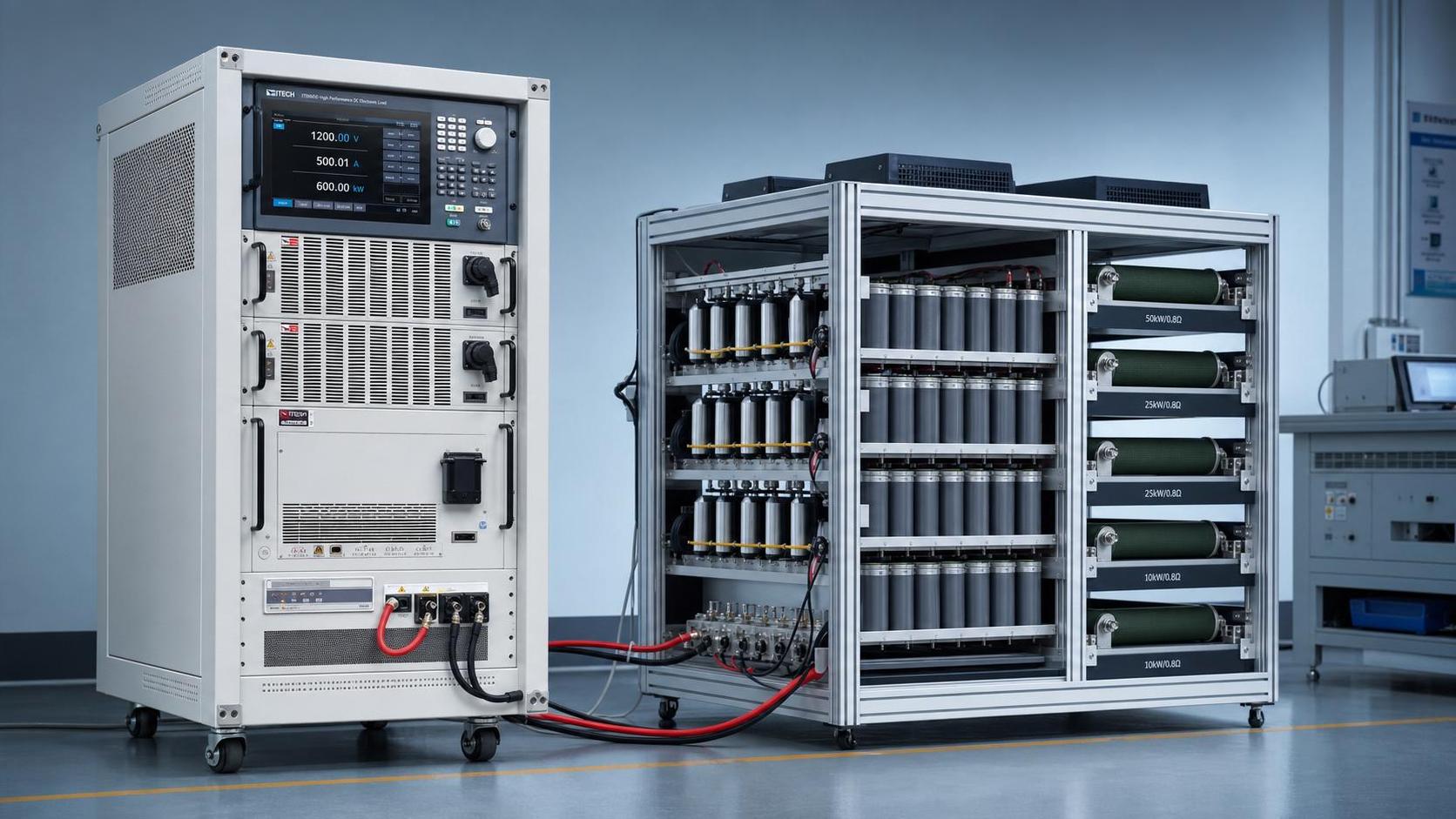
What should you really compare before buying an Electronic Load?
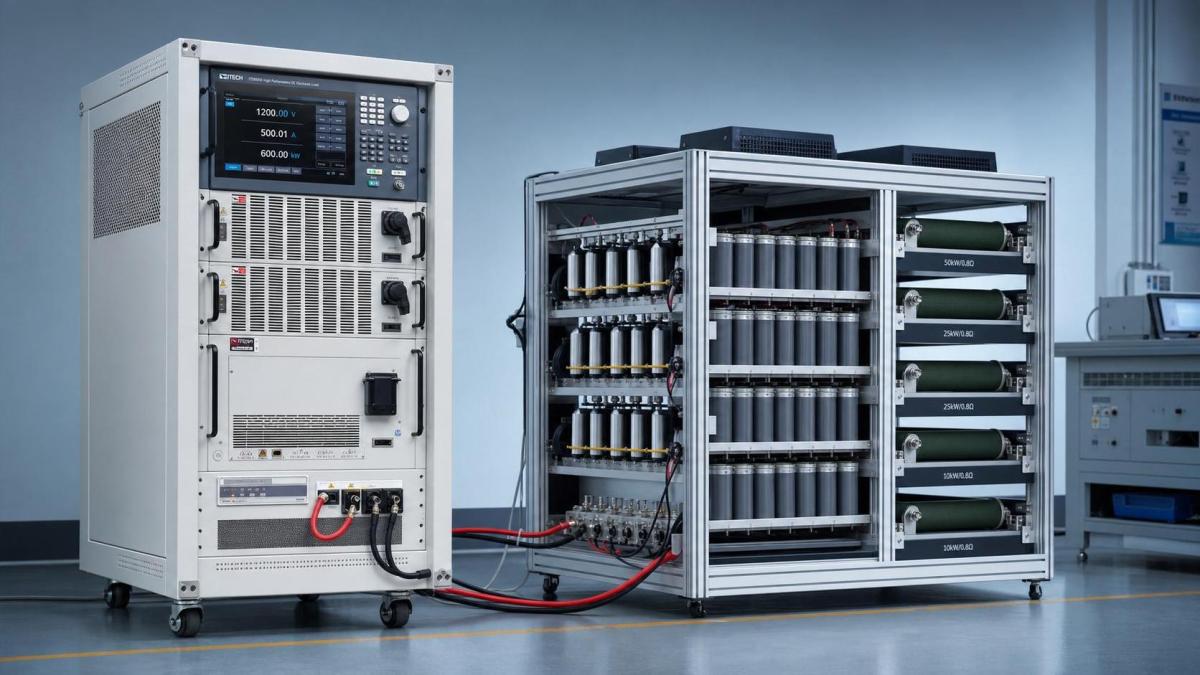
Price is visible first, but it rarely tells the full story.
An Electronic Load affects test accuracy, equipment safety, maintenance effort, and replacement cycles. In resistor and capacitor applications, those factors quickly turn into cost.
That is why a practical buying checklist starts with specifications, not quotations.
In real projects, the better question is simple: will this Electronic Load still perform correctly after repeated thermal stress, voltage swings, and long test runs?
For capacitor banks, battery testing, rack systems, and load bank integration, the answer depends on several technical details that are easy to miss early on.
Suppliers with experience across resistive load bank, rack mounted load bank, battery load tester, and capacitor bank systems usually understand these crossover requirements better.
How much power and voltage range is enough for your application?
This is usually the first specification checked, but it is often checked too narrowly.
An Electronic Load must support the full operating window, not only the nominal test point. That means maximum voltage, current, power, and derating behavior all matter together.
For example, a unit may meet your power target at low voltage, yet fail when voltage rises and current limits change. That mismatch creates retesting, delays, or inaccurate acceptance results.
A safer approach is to check three layers:
- Continuous power rating under actual ambient temperature.
- Short-term overload capacity for transient testing.
- Minimum and maximum voltage or current ranges across future products.
This matters even more in capacitor discharge testing and battery load test scenarios, where sudden energy changes place extra stress on the Electronic Load.
If expansion is likely, buying exactly to today’s rating can be expensive later. A moderate reserve is usually cheaper than replacing the platform.
A quick check table for critical rating decisions
Before comparing models, it helps to turn specifications into decision questions.
Which performance specs make the biggest difference in test quality?
If the goal is repeatable evaluation, basic ratings are only the start.
Load regulation, measurement accuracy, response speed, and ripple behavior all influence whether your data can be trusted.
For resistor and capacitor field testing, unstable readings may hide thermal issues, discharge anomalies, or control drift. Those errors can look small at first and become expensive later.
A reliable Electronic Load should be assessed for:
- Current and voltage measurement accuracy across the full range.
- Dynamic response when loads change rapidly.
- Resolution at low current or low power conditions.
- Stability during long-duration burn-in or discharge cycles.
More advanced setups may also need programmable sequences, remote sensing, and data logging. These are not cosmetic features. They reduce manual adjustment and lower the chance of operator error.
Where production and validation share the same station, response consistency matters even more than headline accuracy numbers.
Is cooling just a mechanical detail, or a buying decision?
It is absolutely a buying decision.
Cooling directly affects reliability, enclosure size, service intervals, and operating noise. It also changes how much power an Electronic Load can sustain in real conditions.
Air-cooled designs are common and practical for many benches and rack systems. They are simpler to install, but airflow paths must remain clean and stable.
Liquid cooling becomes attractive when power density rises, floor space is limited, or heat must be controlled more tightly. In those cases, long-term operating cost may improve despite higher initial investment.
This is one area where broader load bank experience helps. Teams familiar with portable load bank and liquid cooling load bank designs often build stronger thermal safeguards into the Electronic Load platform.
When reviewing cooling, confirm these points early:
- Derating curve versus ambient temperature.
- Fan life, filter access, and alarm functions.
- Cooling redundancy for mission-critical testing.
- Site requirements for exhaust, water loop, or rack spacing.
Skipping this review often leads to a unit that works in quotation conditions, but struggles on the factory floor.
What hidden costs usually appear after the purchase?
The purchase price is only one part of the total cost.
A lower-cost Electronic Load may require more cooling energy, more frequent calibration, slower setup, or extra external protection. Those costs accumulate quietly.
A few examples show up repeatedly:
- Limited interfaces create manual data collection and longer test time.
- Weak protection design increases failure risk during abnormal input events.
- Poor spare parts access extends downtime after simple faults.
- Inadequate documentation slows commissioning and integration.
In resistor cabinet, capacitor bank, and battery discharge environments, protective functions deserve close attention. Over-voltage, over-current, reverse polarity, over-temperature, and short-circuit protection should be clearly defined.
A durable Electronic Load may cost more upfront, yet save money through longer calibration stability and fewer interrupted test cycles.
A practical way to compare total ownership factors
When two quotations look similar, these points usually separate them.
How do you judge supplier capability without relying on marketing claims?
A strong specification sheet is useful, but it is not enough.
The better test is whether the supplier can explain thermal design, component selection, protection logic, and service support in plain technical terms.
For an Electronic Load used around resistor and capacitor systems, supplier depth matters because applications often overlap. A project may begin with DC testing and later connect to rack load banks, battery testers, or capacitor discharge stations.
In that context, manufacturing breadth is relevant. A company already building resistive load bank, rack mounted load bank, electronics load bank, liquid cooling load bank, battery load tester, grounding resistor cabinet, and capacitor bank equipment usually has a wider reliability base.
Useful questions to ask include:
- Which power components are used, and how are they protected?
- What validation tests are performed before shipment?
- How are replacement parts handled over the product life cycle?
- Can the design be scaled for future voltage or power growth?
A supplier that answers these clearly usually reduces project risk more than a cheaper offer with limited technical visibility.
What is the smartest next step before making the final choice?
Build your decision around a written checklist, then test every quotation against that list.
Start with application facts: voltage range, current range, duty cycle, cooling limits, interface needs, and expected expansion. Then compare each Electronic Load against those conditions, not against a generic brochure.
It also helps to separate must-have items from future options. That keeps the comparison realistic and avoids paying for features that never get used.
A sound buying decision usually comes down to this balance: enough electrical margin, stable thermal design, clear protection, serviceable construction, and support from a supplier with related resistor and capacitor system experience.
When the Electronic Load is matched to the actual test profile, cost control becomes easier because retesting, downtime, and premature replacement are far less likely.
The next move is practical: list your real operating conditions, compare them against supplier data, and challenge any specification that looks incomplete. That step usually prevents the most expensive mistakes.


Please give us a message
