

Related content
- Oct 23, 2026Sunwin WN-18 18kW Rack-Mounted Air Cooled Load BankThe Sunwin WN-18 is an 18kW rack-mounted air cooled load bank with a reliability rate unrivaled on the market, specifically designed to support airflow testing and cooling system verification within the facility. With three-phase 400Vac input and 18kW rated power, it precisely simulates the heat generation and airflow characteristics of IT equipment through adjustable airflow and real power loading, providing reliable evidence for data center airflow management and heat dissipation verification.
Powered by 10 forced-air cooling fans with an airflow volume of ≥5508 m³/h, the WN-18 offers flexible airflow adjustment from 0 to 100% (tolerance ±2%), and with fin-type heating resistive tubes and multiple temperature protections, it is widely used in data centers, generators, power systems, new energy sources and laboratory testing. - Oct 22, 2026Sunwin WN-6 6kW Rack-Mounted Load BankThe Sunwin WN-6 is a 6kW rack-mount resistive load bank designed for low-power equipment test scenarios. Adopting a 6U rack-mount form factor, it supports dual-channel single-phase AC230V input with a maximum of 3kW per channel and a total rated power of 6kW.
By combining 0.5kW, 1kW and 1.5kW load units, the WN-6 achieves fine loading steps of 0.5kW, making it suitable for performance verification, factory inspection and maintenance testing of small-scale generators, UPS units, power modules, inverters and other AC power-supply devices. - Oct 21, 2026Sunwin 50kW AC Liquid-Cooled Rack Mounted Resistive Load BankExplore Sunwin's 50kW rack-mount AC liquid-cooled load bank for server thermal, cooling system, UPS and generator testing. Features include Modbus TCP monitoring, 75 L/min cooling flow and automatic unloading protection.
- Oct 20, 2026Sunwin WN-240L 240kW AC Liquid-Cooled Resistive Load BankThe Sunwin WN-240L is a 240kW high-power AC programmable liquid-cooled load bank designed for performance testing, burn-in testing and maintenance of power sources such as generator sets, UPS systems, solar inverters, energy storage systems and industrial electrical equipment. Its core advantage lies in an advanced closed-loop liquid cooling system, delivering 240kW of continuous load capacity with exceptional stability and low noise.
Equipped with intelligent sensors and dual control interfaces (local HMI touch screen + remote PC control), and supporting three-phase 380/400/415/480/690Vac wide voltage levels, the WN-240L ensures precise, reliable and safe testing in demanding industrial environments, especially in indoor or space-constrained test scenarios.
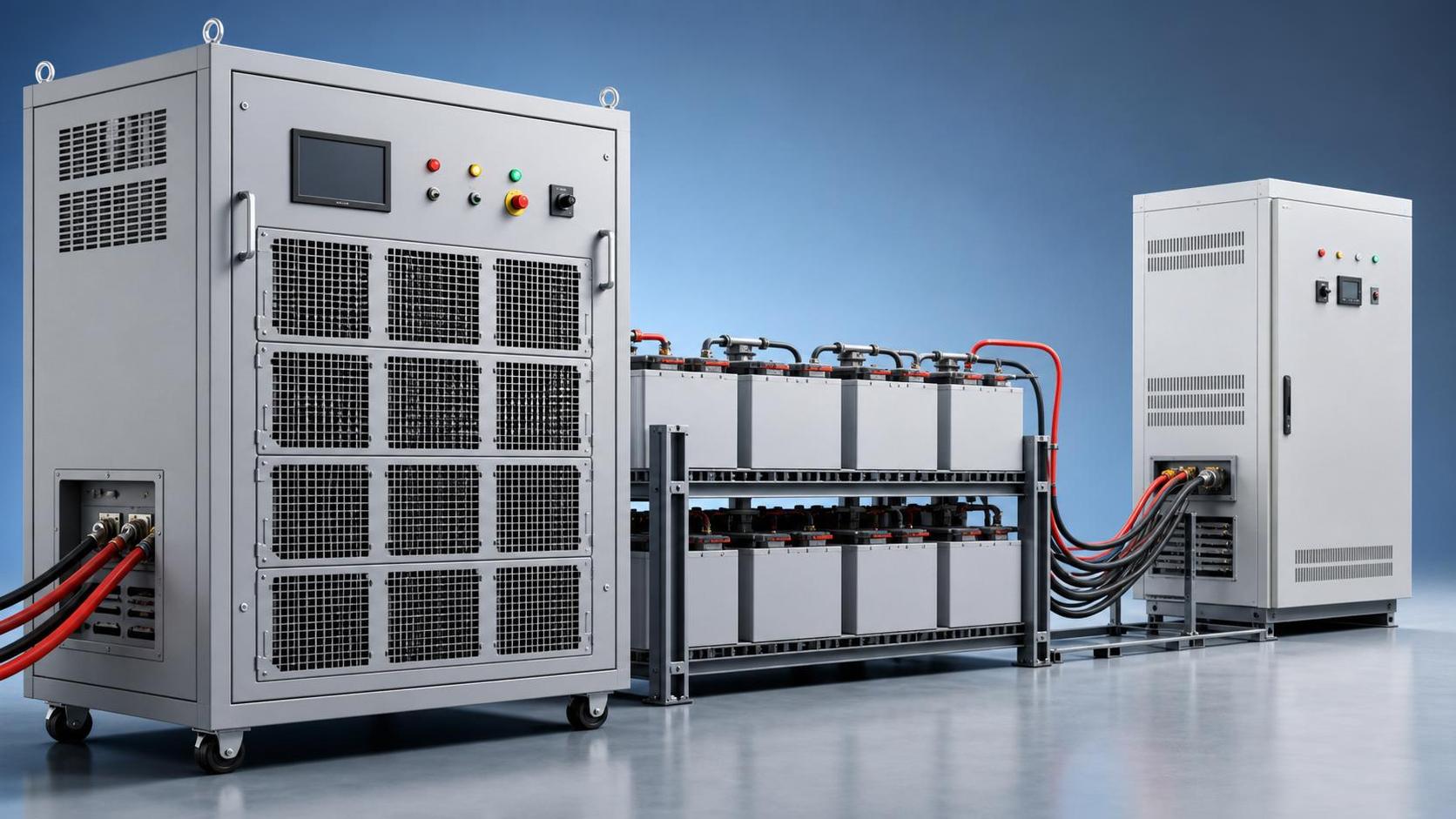
DC Load Bank testing gives a clear answer to a basic but critical question: can a battery string or rectifier deliver stable DC power when the load is real, sustained, and demanding?
That matters in telecom rooms, data centers, substations, UPS systems, renewable storage links, and industrial backup power, where nameplate values alone do not show actual readiness.
A battery may appear charged. A rectifier may appear healthy. Yet hidden voltage drop, weak cells, thermal stress, loose connections, or poor current sharing often appear only during controlled loading.
For operations that rely on resistor and capacitor related power equipment, practical verification is more useful than assumption. A well-designed DC Load Bank helps turn that verification into measurable data.
What DC Load Bank testing really checks
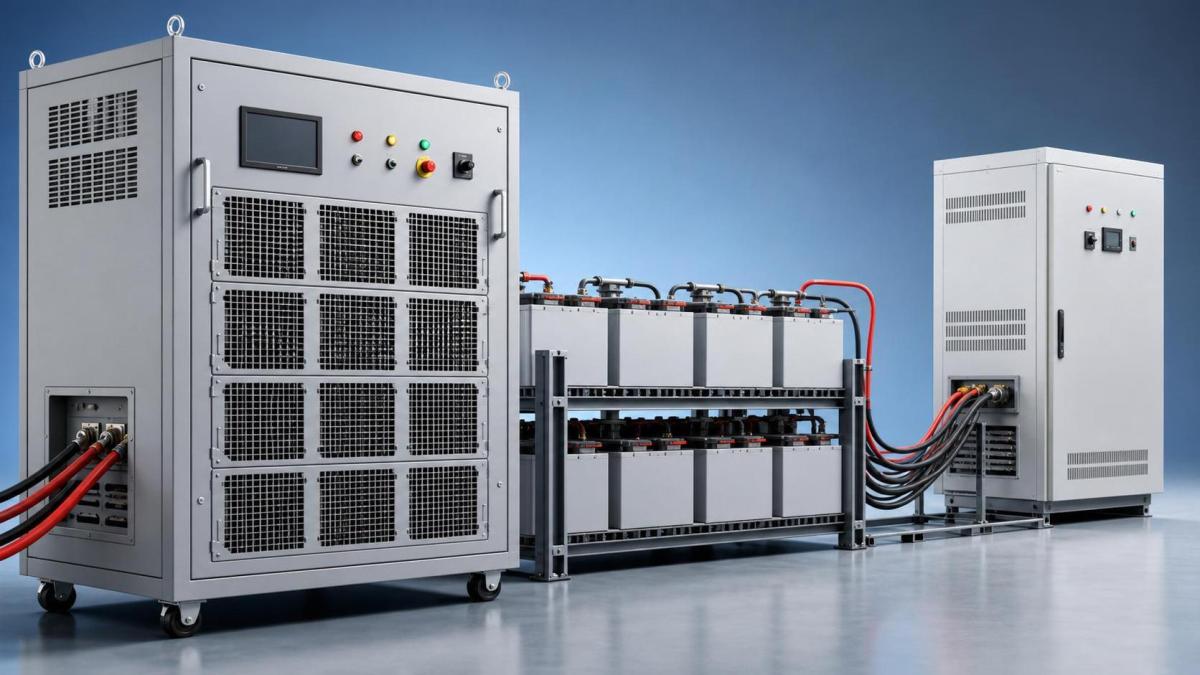
At its core, a DC Load Bank applies a controlled resistive load to a DC power source. The goal is not simply to consume power.
The goal is to observe behavior under conditions that resemble service demand. That includes discharge stability, voltage regulation, current capacity, heat rise, and response over time.
When the source is a battery bank, the test shows how long it can support a target current before voltage falls below a defined limit.
When the source is a rectifier, the test reveals whether output remains stable across changing load steps and whether the unit can hold rated performance continuously.
In many facilities, both elements need testing together. The rectifier supports the DC bus during normal operation, while the battery covers faults, transfer events, or mains failure.
A useful test therefore looks beyond pass or fail. It shows how the system behaves as an integrated DC supply chain.
Why the industry pays close attention to this process
Battery autonomy is under pressure from higher uptime expectations, tighter maintenance windows, and more distributed power assets. That has made DC Load Bank testing more routine, not less.
There is also a practical shift in maintenance philosophy. Periodic visual inspection is still necessary, but it does not expose capacity loss with enough confidence.
A weak battery string can sit unnoticed until an outage occurs. A rectifier can carry light load without trouble, then drift or overheat once demand rises.
That is why controlled load testing remains relevant even with modern monitoring systems. Sensors provide trend data. A DC Load Bank confirms performance under stress.
This is especially important where resistor-based dissipation equipment, capacitor support assemblies, and backup DC networks form part of broader electrical reliability programs.
Key indicators that define battery and rectifier performance
Accurate interpretation depends on watching several indicators together rather than relying on a single reading.
For battery systems
- Terminal voltage during discharge and the rate of voltage decline.
- Discharge current stability across the full test period.
- Available runtime to the specified end voltage.
- Temperature rise at cells, intercell links, and terminals.
- Differences between strings or between individual sections.
For rectifier systems
- Output voltage regulation under steady and stepped load.
- Current sharing between parallel rectifier modules.
- Ripple behavior and DC output quality.
- Thermal performance during sustained loading.
- Protection behavior, alarms, and recovery response.
In practical terms, a good DC Load Bank test turns these points into comparable evidence. That helps distinguish temporary fluctuation from real deterioration.
Where DC Load Bank testing is most useful
The most obvious use is preventive maintenance, but the value is wider than that.
Commissioning is one important stage. New battery strings, rectifier cabinets, and DC distribution assemblies need proof that installation quality matches design intent.
Capacity verification is another common case. Facilities often need to confirm whether existing backup time still meets operational targets after years of service.
Troubleshooting also benefits. If alarms, unexplained voltage drift, or uneven charging behavior appear, a DC Load Bank can help isolate whether the source, connection, or thermal condition is responsible.
In power equipment portfolios like Sunwin’s, that wider view makes sense. Resistive load banks, rack mounted load banks, portable load banks, battery load testers, and related grounding or capacitor assemblies often support the same reliability workflow.
The equipment may differ, but the operating question stays consistent: can the power path perform at rated demand without unstable behavior?
How to approach a reliable test in the field
Test quality depends on preparation as much as on the load device itself. Poor setup can produce misleading conclusions.
Start with the correct test objective
A discharge capacity test, a rectifier regulation test, and a combined system verification do not use the same profile.
The target current, duration, cutoff voltage, data interval, and safety limits should reflect the actual operating requirement, not a generic template.
Match the load bank to the DC system
Voltage range, current capacity, cooling method, control resolution, and portability all affect usability. A compact telecom site and a large industrial DC room need different handling.
Portable units are useful for on-site maintenance. Rack mounted or electronic load solutions fit repeated testing programs with tighter control needs.
In higher density applications, liquid cooling or advanced heat management may become relevant, especially where test duration is long and space is limited.
Record more than one parameter
Current alone is not enough. Voltage, time, temperature, cell imbalance, and alarm events provide the context needed to interpret the test correctly.
This is where a professional DC Load Bank setup becomes valuable. Repeatable control and clean data logging make comparison between test cycles much easier.
Common errors that reduce accuracy
Many disappointing results come from avoidable mistakes rather than equipment limits.
- Testing without confirming ambient temperature and ventilation conditions.
- Using cable sizes or connectors that add unnecessary resistance.
- Ending the test too early, before meaningful behavior appears.
- Ignoring weak sections inside an otherwise acceptable battery string.
- Applying a DC Load Bank profile that does not reflect the actual service load.
Another frequent issue is reading the result in isolation. A single test becomes more useful when compared with previous records, maintenance history, and system design limits.
What to look for when selecting equipment and next steps
Selection should focus on control accuracy, heat dissipation, safety interlocks, data visibility, and the ability to match your DC voltage and current range.
Resistive technology remains a practical choice for many DC Load Bank applications because it is straightforward, stable, and well suited to repeatable battery and rectifier testing.
Where testing is frequent, it also helps to align the load bank with the broader maintenance toolkit, including battery load testers, grounding resistor cabinets, and related power support equipment.
The sensible next move is to define the actual duty profile first: system voltage, target current, required runtime, site mobility, cooling constraints, and reporting depth.
From there, a DC Load Bank can be evaluated as a measurement tool rather than just a power-consuming device. That shift usually leads to better testing decisions and more reliable DC infrastructure.




Please give us a message
