

Related content
- Sep 14, 2026What to Check Before Buying a Rack Mounted Load Bank for Data Center TestingSunwin Rack Mounted Load Bank buying guide for data center testing: compare electrical ratings, load steps, cooling, controls, safety, and installation needs before ordering.
- Sep 09, 2026Resistive Load Banks Explained: When Pure Resistive Testing Is the Right ChoiceSunwin Resistive Load Bank testing explained: discover when pure resistive loads verify generator, UPS, battery, and power-system capacity with confidence.
- Sep 07, 2026Choosing a DC Load Bank for Battery Discharge Testing: Key Ratings to CompareSunwin DC Load Bank selection made simple: compare voltage range, continuous power, control modes, thermal limits, safety protection, and data logging for accurate battery discharge tests.
- Aug 27, 2026Sunwin Load Banks Power the Future of Data Center ReliabilitySunwin Load Banks Power the Future of Data Center Reliability
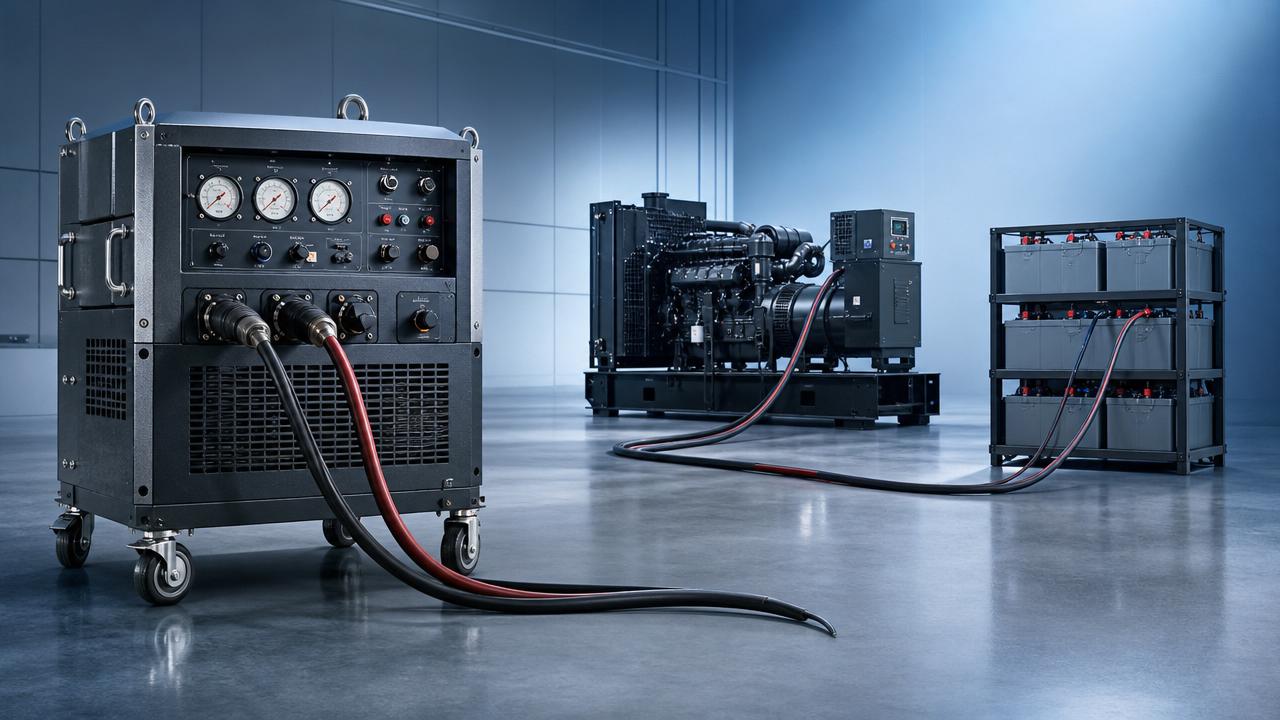
Choosing the right testing solution affects schedule, safety, and operating cost. A Portable Load Bank often becomes the better project choice when speed, mobility, and dependable field testing matter most.
In power systems, resistive and capacitive equipment must perform under real conditions. That is why many projects use a Portable Load Bank for generator testing, UPS verification, battery discharge, and commissioning work.
Compared with fixed installations, portable units support rapid deployment, easier relocation, and flexible testing across multiple sites. For projects with changing loads or temporary power assets, that advantage can be significant.
What is a Portable Load Bank, and why does it matter in resistive testing?
A Portable Load Bank is a movable electrical test device that simulates a real power load. It helps validate generators, batteries, power supplies, and distribution systems before actual operation.
Most models in this context are resistive load banks. They convert electrical energy into heat through resistor elements, creating a stable and measurable testing condition.
This matters because many standby systems rarely run at full demand. Without proper testing, hidden issues may remain undetected until a power event causes failure.
A Portable Load Bank supports preventive verification. It confirms voltage stability, current behavior, cooling response, and control accuracy under controlled and repeatable conditions.
For companies working with resistor banks, capacitor banks, and associated test infrastructure, portability adds operational value. One unit can serve several assets instead of remaining tied to a single location.
When is a Portable Load Bank better than a fixed load bank?
A Portable Load Bank is usually the better choice when testing locations change. Mobile projects, rental fleets, temporary sites, and distributed facilities benefit from easy transport and fast setup.
It is also strong where commissioning windows are short. A fixed system may need civil work, permanent wiring, and design approval, while a portable system reduces preparation time.
Portable units fit projects where several generators or battery systems require testing in sequence. Instead of installing multiple fixed banks, one mobile asset can support a rotating schedule.
Another advantage appears during maintenance outages. Teams can bring the Portable Load Bank directly to the equipment, limiting service disruption and reducing unnecessary asset movement.
Fixed load banks remain useful for continuous on-site testing. However, they are less attractive when the project needs adaptability, lower initial infrastructure cost, or temporary capacity.
- Best for multi-site testing programs
- Useful for temporary or rental power systems
- Effective when project scope may change
- Helpful when permanent installation is not justified
Which project scenarios benefit most from a Portable Load Bank?
Several applications clearly favor a Portable Load Bank. One common case is generator acceptance testing at construction sites, hospitals, data rooms, telecom stations, and industrial backup systems.
Another strong scenario is battery discharge testing. A portable system allows verification of battery strings and energy storage performance without requiring a dedicated testing room.
Portable load testing also fits marine, mining, and remote energy projects. These environments often lack space for permanent gear, and they demand rugged, transportable equipment.
Temporary power events are another example. During peak demand support or emergency deployments, a Portable Load Bank helps validate readiness before systems carry mission-critical loads.
In electronics manufacturing and service environments, compact rack mounted or electronics load banks may be preferred indoors. Yet portable formats remain valuable for field verification outside the lab.
How do you judge whether portability will lower total project cost?
The purchase price alone does not decide value. A Portable Load Bank may reduce total project cost through lower installation expense, fewer site modifications, and better equipment sharing.
Start with deployment frequency. If one unit will test many systems across several locations, the cost per project often becomes more favorable than fixed alternatives.
Next, consider infrastructure savings. Portable systems usually avoid permanent supports, dedicated rooms, and complex integration, which can shorten approval cycles and labor requirements.
Downtime cost is equally important. If moving the Portable Load Bank to equipment prevents lengthy shutdowns, the operational savings may exceed the equipment investment itself.
Transport and handling still matter. For very frequent testing in one place, a fixed load bank may become cheaper over time. The right answer depends on mobility versus repetition.
Quick decision checklist
- Will the unit serve more than one site?
- Does the project need immediate commissioning support?
- Would permanent installation add major cost or delay?
- Is flexible capacity more important than fixed integration?
- Can one Portable Load Bank replace multiple temporary solutions?
What technical factors should be checked before selecting a Portable Load Bank?
Capacity is the first factor. The Portable Load Bank must match the voltage, current, phase configuration, and power rating of the equipment being tested.
Load step resolution is also important. Fine adjustment improves test accuracy, especially for battery load testing, UPS evaluation, and staged generator performance verification.
Cooling design affects reliability. Air-cooled portable systems are common, but liquid cooling load bank designs may be suitable where compact high-power density is required.
Control and data logging deserve attention. Modern units should offer clear monitoring of voltage, current, frequency, temperature, and protection alarms during operation.
Physical design matters in the field. Wheel structure, lifting points, enclosure strength, cable length, and weather resistance all influence real project usability.
For businesses involved in resistor and capacitor solutions, system compatibility should also be reviewed. Testing procedures may interact with capacitor bank switching, grounding resistor cabinets, or power quality controls.
What risks and misconceptions should be avoided?
A common misconception is that any Portable Load Bank can handle any field task. In reality, duty cycle, environmental rating, and cable configuration must match the application.
Another mistake is focusing only on mobility. Portability is valuable, but safety interlocks, thermal performance, and test accuracy remain more important than easy movement alone.
Some projects also ignore future expansion. If system capacity may grow, selecting a Portable Load Bank with modular steps or parallel capability can protect long-term value.
Poor ventilation planning creates risk. Resistive load testing generates heat, so spacing, airflow direction, and surrounding material conditions must be reviewed before operation.
Documentation should not be overlooked. Clear test procedures, operating records, and maintenance checks improve reliability and support compliance expectations during audits or service reviews.
How can the right supplier improve Portable Load Bank project outcomes?
Supplier capability influences more than delivery. Good technical support helps define load profile, connection method, protection needs, and future compatibility with existing power equipment.
A broad product range is useful because projects vary. Some applications need a compact Portable Load Bank, while others need rack mounted, electronics, liquid cooling, or battery load test solutions.
Sunwin focuses on manufacturing resistive load bank products and related power testing equipment. That includes Portable Load Bank solutions, battery load testers, grounding resistor cabinets, and capacitor bank products.
This product breadth can simplify sourcing for projects involving both test equipment and resistor or capacitor components. Better alignment often means smoother implementation and clearer technical communication.
Before final selection, request application guidance, performance data, and operating recommendations. A well-matched Portable Load Bank delivers stronger results than a generic unit chosen only by price.
Final answer: when is a Portable Load Bank the better project choice?
A Portable Load Bank is the better project choice when flexibility, fast deployment, and on-site testing efficiency are priorities. It performs especially well in multi-site, temporary, remote, or time-sensitive applications.
It also makes sense when permanent installation costs are difficult to justify. If one unit can support several assets, the total return often improves considerably.
The best results come from matching capacity, safety, cooling, and mobility features to the actual test plan. That is the difference between simple portability and true project value.
If your power system project involves generators, batteries, resistor cabinets, or capacitor-related equipment, reviewing Portable Load Bank options early can reduce risk and improve execution quality.
The next step is practical: define your load profile, site conditions, and testing frequency, then compare those needs against available Portable Load Bank configurations before procurement begins.


Please give us a message
