

Related content
- Oct 21, 2026Sunwin 50kW AC Liquid-Cooled Rack Mounted Resistive Load BankExplore Sunwin's 50kW rack-mount AC liquid-cooled load bank for server thermal, cooling system, UPS and generator testing. Features include Modbus TCP monitoring, 75 L/min cooling flow and automatic unloading protection.
- Oct 20, 2026Sunwin WN-240L 240kW AC Liquid-Cooled Resistive Load BankThe Sunwin WN-240L is a 240kW high-power AC programmable liquid-cooled load bank designed for performance testing, burn-in testing and maintenance of power sources such as generator sets, UPS systems, solar inverters, energy storage systems and industrial electrical equipment. Its core advantage lies in an advanced closed-loop liquid cooling system, delivering 240kW of continuous load capacity with exceptional stability and low noise.
Equipped with intelligent sensors and dual control interfaces (local HMI touch screen + remote PC control), and supporting three-phase 380/400/415/480/690Vac wide voltage levels, the WN-240L ensures precise, reliable and safe testing in demanding industrial environments, especially in indoor or space-constrained test scenarios. - Oct 19, 2026Sunwin 60kW AC Liquid-Cooled Resistive Load BankExplore Sunwin's 60kW AC liquid-cooled resistive load bank for UPS, generator and data center testing. Its compact 10U rack design supports continuous operation, low-noise cooling and independent three-phase step loading.
- Oct 18, 2026Sunwin WN-500L 500kW AC Liquid-Cooled Resistive Load BankThe Sunwin WN-500L is a 500kW AC liquid-cooled resistive load bank designed for data centers, providing controlled load testing for three-phase AC power supplies. Its core advantage lies in its innovative liquid cooling system, which enables stable operation at full rated power while minimizing heat dissipation and noise in the test environment — making it ideal for indoor test facilities where traditional air-cooled solutions are impractical or difficult to deploy.
With pure resistive loading for high-precision power absorption, an on-board HMI touch screen, PC-based remote control and Modbus TCP communication, the WN-500L makes load verification of data center backup generators, UPS and power distribution systems quieter, cleaner and more reliable.
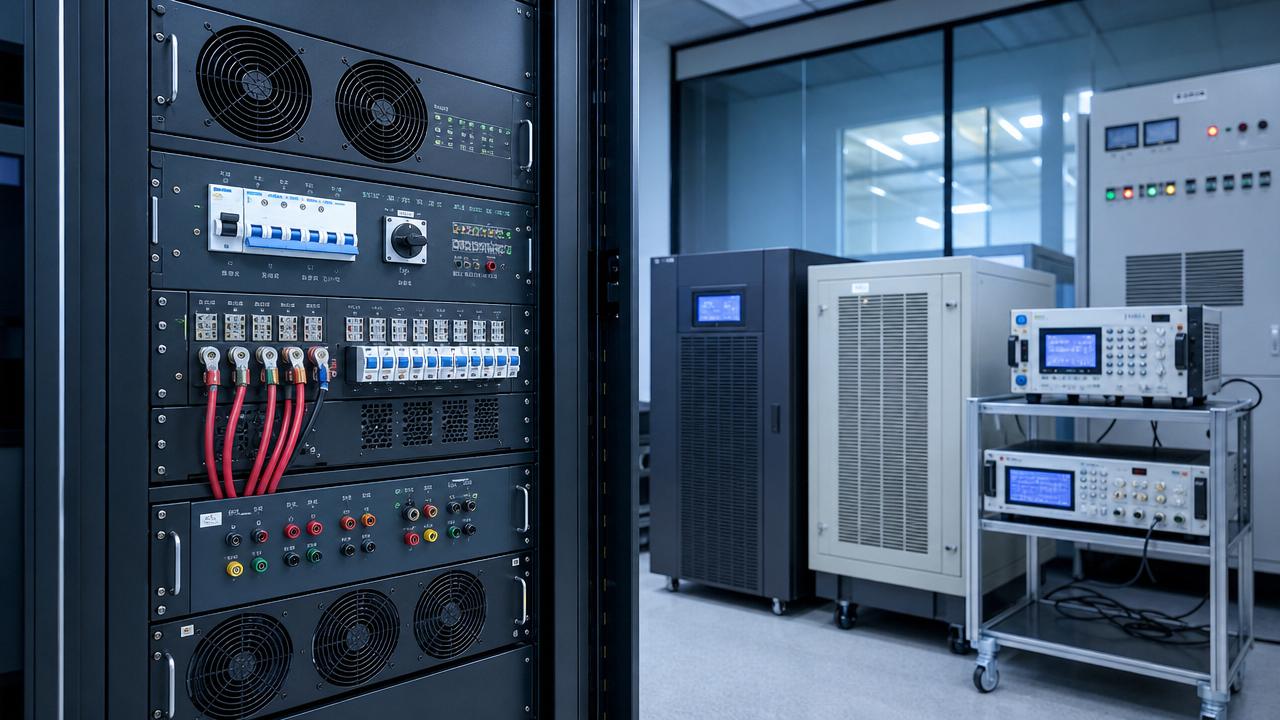
Choosing the right Rack Mounted Load Bank size is one of the most important steps in safe and accurate power testing. Yet many operators still run into avoidable problems because sizing decisions are based on rated numbers alone, without considering real site conditions, load steps, airflow, duty cycle, or future testing needs.
If the load bank is too small, it may not verify system capacity properly. If it is too large, operators can face unstable control, unnecessary cost, poor low-load resolution, or installation issues. In daily operation, the best sizing choice is not simply the highest kW value. It is the size that matches the actual test objective, power source, and working environment.
What operators usually want to know before sizing a rack mounted load bank
Most users are not looking for theory first. They want to know how to avoid buying the wrong unit, how much capacity they really need, and what mistakes can affect test accuracy, safety, and equipment life.
For operators, the practical questions are clear. Will the load bank cover the generator, UPS, battery, or power supply they need to test? Can it run safely for the required duration? Will it fit the rack, cooling path, and electrical setup on site?
That is why sizing should always begin with application details rather than catalog ratings. The wrong assumptions made early in selection often create operating trouble later, especially when the load bank is expected to support repeated testing in demanding environments.
Mistake 1: Sizing only by nameplate power and ignoring the real test target
A common mistake is choosing a Rack Mounted Load Bank only according to the rated kW of the source. On paper, this looks logical. In practice, it often leads to poor matching because the real test target may be different from the full nameplate value.
For example, some operators only need routine verification at 25%, 50%, and 75% load steps. Others need full-load acceptance testing, thermal validation, battery discharge simulation, or burn-in for electronic systems. Each task creates a different sizing requirement.
If the goal is periodic functional testing, a lower capacity with precise step control may be more useful than a larger unit with coarse adjustment. If the goal is full-capacity proof under worst-case conditions, the load bank must support the complete test profile without compromise.
Before selecting size, define the exact testing purpose. Ask what equipment will be tested, at what load levels, for how long, and under what site conditions. This simple step prevents many expensive specification errors.
Mistake 2: Forgetting that voltage, phase, and power factor affect usable load capacity
Another sizing error happens when users focus on kW but do not fully confirm voltage, phase configuration, frequency, and power factor requirements. A load bank that looks correct in total power may still be unsuitable for the actual electrical system.
Rack mounted models are often used in controlled technical environments, but that does not mean every system is identical. Single-phase and three-phase applications require different planning. Testing at 208V, 380V, 400V, 415V, or 480V changes the current and wiring demands significantly.
Users should also distinguish between resistive testing and application conditions involving combined load behavior. If the test objective includes simulation beyond simple resistive loading, sizing must reflect that. Otherwise, the selected bank may not provide a meaningful operating test.
The practical lesson is simple: always size based on the real electrical parameters of the test setup, not just a general kW target. Confirm current draw, breaker limits, cable size, connection type, and load step compatibility before final selection.
Mistake 3: Ignoring minimum load step resolution
Many operators assume larger is better. But oversized units can create a very practical problem: poor control at lower load levels. If the smallest available step is too large, the operator cannot apply load with the precision needed for routine checks or gradual test sequences.
For example, a high-capacity load bank may have step increments that work well for full-load tests but are inconvenient for smaller systems, staged commissioning, or battery discharge testing. This can reduce the accuracy of the test and make operation less flexible.
In rack-mounted applications, fine control is often valuable because testing conditions may change frequently. One day the operator may test a UPS string, and another day a backup power module. Good sizing should consider both maximum demand and practical adjustment range.
When reviewing specifications, look carefully at the load step structure. Do not ask only, “What is the total kW?” Also ask, “What is the smallest controllable increment, and does it match the tests we actually perform?”
Mistake 4: Underestimating duty cycle and test duration
Some load banks are sized correctly for power but not for running time. This is a serious issue because a unit may support a target load level briefly, yet fail to perform reliably during extended tests if the duty cycle is not matched.
Operators often need longer test windows than expected. Generator proving, battery discharge, thermal checks, or routine maintenance programs may require sustained operation. If the load bank is not sized for the required duration, overheating or protective shutdown can interrupt the test.
This is especially important in enclosed rack environments, where thermal conditions can change quickly. A unit that appears sufficient in a short demonstration may behave very differently in repeated field use or high ambient temperatures.
Always review continuous rating versus short-time rating. Confirm how long the Rack Mounted Load Bank must operate at each load level, and whether the cooling design supports that profile. This protects both the testing plan and the equipment itself.
Mistake 5: Overlooking airflow, heat rejection, and rack integration limits
Heat is one of the biggest sizing realities operators face, yet it is often treated as a secondary issue. Every resistive load bank turns electrical energy into heat. If airflow and heat rejection are not handled properly, even a well-sized unit on paper can become problematic in operation.
Rack-mounted installations have tighter physical constraints than standalone systems. Air intake clearance, exhaust direction, room ventilation, cable routing, and neighboring equipment all affect performance. A load bank may fit the rack dimensions but still be a poor fit thermally.
Choosing a larger unit without checking cooling capacity can create unnecessary stress in the room or cabinet. On the other hand, undersizing ventilation around the load bank can lead to derating, nuisance alarms, or shortened component life.
Operators should confirm not only the electrical rating but also the installation environment. Ask how much heat the unit will release, how airflow should be managed, and whether nearby devices are sensitive to elevated temperature.
Mistake 6: Not allowing for future testing needs
Another common error is sizing only for current use with no margin for system growth. This may seem cost-effective at first, but it can become limiting as equipment capacity increases or testing standards change.
For example, a facility may currently test one power module at a time, but later need to validate parallel systems, expanded battery strings, or upgraded backup power equipment. If the load bank has no practical reserve, operators may need an additional unit sooner than expected.
That said, future margin should be realistic, not excessive. Oversizing heavily “just in case” can create the same problems discussed earlier, including cost, reduced low-load control, and installation burdens. The goal is balanced headroom, not maximum possible size.
A useful rule is to evaluate expected system expansion over the next few years and size for likely scenarios, not remote possibilities. This gives operators flexibility without creating unnecessary operational compromise.
Mistake 7: Treating all applications as the same
A load bank used for generator testing is not always sized the same way as one used for UPS systems, battery discharge, electronics validation, or data center support equipment. The application changes what “correct size” really means.
For generators, users may focus on block loading capability and stable full-load testing. For batteries, discharge duration and current profile may matter more. For electronic equipment, precise step control and compact integration may be higher priorities.
In other words, sizing should follow the operating task. When users apply a generic selection method to a specific application, they often end up with a unit that is technically acceptable but operationally inconvenient.
This is why experienced manufacturers such as Sunwin usually ask about the test object, control method, environment, and intended use frequency before recommending a model. Better input leads to better sizing.
Mistake 8: Ignoring protection, monitoring, and control requirements during sizing
Many users think sizing is purely about load capacity. In reality, the control and protection features can influence whether the chosen unit works well in real operation. A correctly rated load bank still needs the right functional support.
Operators may require local control, remote control, programmable load steps, current and voltage display, over-temperature protection, airflow interlock, or communication with a wider test system. These features affect usability and may influence the suitable model range.
If these needs are considered too late, the selected rack mounted unit may technically meet the load target but fail to support the actual workflow. This can lead to operator frustration, extra modification, or reduced test efficiency.
When planning size, include a simple operational checklist. How will the load be applied? Who will run the test? What alarms or protections are necessary? What data needs to be observed or recorded? These answers often shape the best selection.
Mistake 9: Choosing based on price alone
Budget matters, but price-only sizing decisions often cost more later. An undersized unit may force incomplete testing. An oversized one may waste money and complicate operation. A lower-cost model with weak thermal design or poor step flexibility can also reduce long-term value.
Operators benefit more from a load bank that fits the real testing job than from one that simply looks economical in procurement. Stable performance, practical controls, safe operation, and maintenance reliability all contribute to total value.
This is particularly true when the load bank is used regularly. Small mismatches repeated over many test cycles turn into measurable inefficiency, operator inconvenience, and avoidable downtime.
The better approach is to compare total suitability, not just initial purchase price. A properly sized Rack Mounted Load Bank supports more accurate testing and fewer operational compromises over its service life.
A simple sizing checklist operators can use before buying
To avoid the most common mistakes, operators should gather a short list of practical information before selecting a unit. This step improves communication with the supplier and leads to a more accurate recommendation.
Confirm the equipment to be tested, rated power, voltage, phase, and frequency. Define whether testing is resistive only and identify the required load range, smallest step size, and expected duration at each step.
Then review the installation conditions. Check rack dimensions, available airflow, ambient temperature, cable routing, and ventilation capacity. Also confirm whether remote control, data display, protection functions, or system integration are needed.
Finally, consider realistic future expansion. A little planning can prevent both early obsolescence and unnecessary oversizing. Good sizing is not complicated, but it must be based on real use conditions.
How proper sizing improves everyday operation
When a rack mounted load bank is sized correctly, operators notice the difference immediately. Tests are easier to run, load steps match the procedure, cooling remains stable, and results are more repeatable.
Correct sizing also improves safety. Electrical connections are more appropriate, thermal stress is reduced, and protection features can work within expected conditions. This lowers the risk of interrupted testing or avoidable equipment strain.
From a maintenance perspective, the right unit is easier to live with. It fits the space, supports the workflow, and does not demand constant workaround. That practical benefit matters just as much as the headline rating.
For facilities that rely on routine power testing, proper sizing is not just a specification issue. It is an operational advantage that supports accuracy, efficiency, and confidence in every test cycle.
Conclusion: size for the job, not just the number
The biggest mistake in selecting a Rack Mounted Load Bank is assuming that size is only about maximum kW. In real operation, correct sizing depends on the test goal, electrical characteristics, load step resolution, duty cycle, cooling conditions, control needs, and future plans.
Operators who avoid these common mistakes get more reliable testing, better equipment protection, and smoother day-to-day use. Those who rely only on nameplate numbers often face oversizing, undersizing, or performance issues that could have been prevented.
If you want a load bank that truly supports your testing work, start with the real application and operating conditions. A well-matched unit will always deliver more value than one chosen by headline rating alone.




Please give us a message
