

Related content
- Oct 19, 2026Sunwin 60kW AC Liquid-Cooled Resistive Load BankExplore Sunwin's 60kW AC liquid-cooled resistive load bank for UPS, generator and data center testing. Its compact 10U rack design supports continuous operation, low-noise cooling and independent three-phase step loading.
- Oct 18, 2026Sunwin WN-500L 500kW AC Liquid-Cooled Resistive Load BankThe Sunwin WN-500L is a 500kW AC liquid-cooled resistive load bank designed for data centers, providing controlled load testing for three-phase AC power supplies. Its core advantage lies in its innovative liquid cooling system, which enables stable operation at full rated power while minimizing heat dissipation and noise in the test environment — making it ideal for indoor test facilities where traditional air-cooled solutions are impractical or difficult to deploy.
With pure resistive loading for high-precision power absorption, an on-board HMI touch screen, PC-based remote control and Modbus TCP communication, the WN-500L makes load verification of data center backup generators, UPS and power distribution systems quieter, cleaner and more reliable. - Oct 12, 2026Rack Mounted Load Bank Sizing for Data Center Rack Density and AirflowSize your Sunwin Rack Mounted Load Bank for data center rack density and airflow. Learn how voltage, load steps, and cooling capacity affect selection for reliable commissioning.
- Oct 07, 2026Sunwin Aerospace Power System Testing SolutionAn aerospace power system generates, stores, converts, regulates and distributes electrical energy, and is typically divided into primary power and secondary power. Secondary power converts primary power into another form or specification to meet the requirements of different onboard electrical equipment. As an essential support system, the aerospace power system provides safe and reliable energy for every subsystem of aircraft and spacecraft, and its development level plays a decisive role in improving aircraft performance and extending service life.
From 28Vdc, 270Vdc to 400Hz AC supplies, power quality directly affects the safe operation of onboard equipment. International aerospace power quality standards such as MIL-STD-704 and RTCA DO-160 impose strict requirements on voltage, frequency and transient characteristics. Therefore, comprehensive testing and evaluation of the power system under defined operating conditions is of great significance.
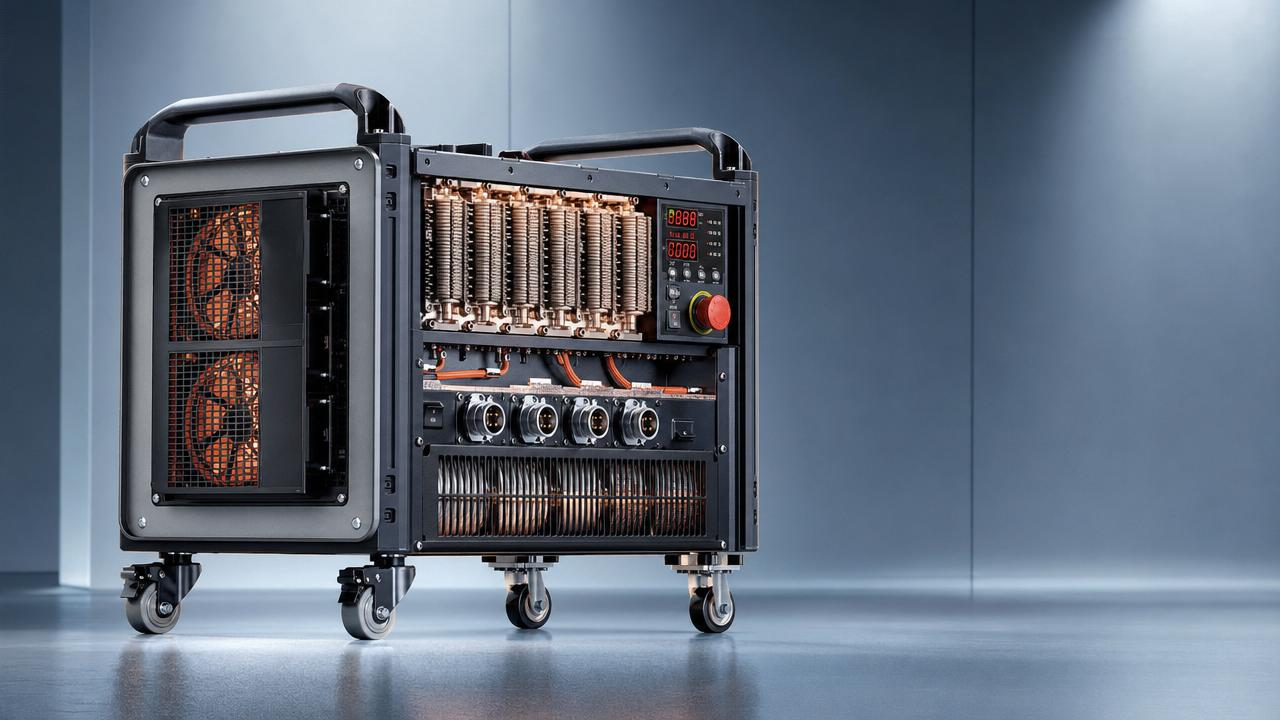
Why does the price of a Portable Load Bank differ so much between suppliers that appear similar on paper? The answer usually starts with rated power, but it never ends there.
A Portable Load Bank sits at the intersection of resistive design, thermal control, measurement accuracy, and field safety. Small differences in these areas can create large pricing gaps.
In the resistor and capacitor industry, cost variation often reflects engineering depth rather than simple markup. That matters when comparing quotes that list similar kW figures.
This guide explains what really drives Portable Load Bank cost, where lower prices may hide risk, and how to compare options based on lifecycle value instead of sticker price alone.
What is included in the price of a Portable Load Bank?
A Portable Load Bank is more than a resistor box with handles. Its cost includes load elements, cooling hardware, control circuits, metering, enclosure design, and protection systems.
The core resistor assembly is often the biggest hidden factor. Material choice, resistor spacing, thermal stability, and corrosion resistance all affect performance and lifespan.
Some units also integrate capacitor-related filtering or power conditioning interfaces. These additions improve stability in sensitive test environments, but they also increase design complexity.
Portable form also adds cost. A compact frame must carry heat safely while remaining easy to move, lift, and deploy in temporary power testing conditions.
Higher-priced models often include better cable management, stronger connectors, clearer displays, and more reliable switching steps. These details improve usability and reduce setup errors.
Typical cost components
- Resistive load elements and insulation materials
- Cooling fans, airflow channels, and thermal sensors
- Control panel, PLC, meters, and step switching
- Portable enclosure, wheels, handles, and frame strength
- Safety interlocks, emergency stop, and alarms
- Factory testing, calibration, and documentation
Why can two Portable Load Bank models with the same rating have very different prices?
Identical kW ratings do not mean identical engineering. Two Portable Load Bank units may both be rated at 100 kW, yet differ sharply in thermal margin and duty capability.
One unit may support continuous operation at high ambient temperature. Another may only handle shorter test cycles under limited site conditions. The specification sheet may not show that clearly.
Measurement quality also changes price. Better current sensing, voltage monitoring, and load step accuracy support more reliable generator, UPS, and battery system testing.
Enclosure protection matters too. A Portable Load Bank for indoor use costs less than one designed for outdoor dust, rain, transport vibration, and harsh industrial sites.
Some suppliers quote a base version without cables, breakers, remote control, or communication ports. Another quote may include these items, creating an apparent but misleading price gap.
Common specification differences behind price variation
- Continuous duty versus intermittent duty
- Indoor enclosure versus weatherproof enclosure
- Basic analog display versus digital metering
- Manual switches versus automated control
- Standard resistors versus higher-grade thermal elements
How do resistor design and cooling system influence Portable Load Bank cost?
In resistive equipment, heat is the cost driver that never disappears. A Portable Load Bank converts electrical energy into heat, so thermal design directly shapes durability and safety.
Higher-quality resistor elements maintain stable resistance over repeated heating cycles. They reduce drift, hot spots, and premature failure during frequent commissioning or maintenance tests.
Cooling design is equally important. Fan size, airflow path, intake filtration, and exhaust layout determine whether heat leaves the cabinet efficiently under real operating conditions.
A cheaper Portable Load Bank may rely on tighter packing and lower airflow margin. That can lower manufacturing cost, but increase temperature stress and maintenance frequency.
Advanced products may use optimized resistor placement, thermal cutoffs, airflow monitoring, or even liquid cooling principles in larger systems. These features improve reliability but raise upfront pricing.
This is where companies like Sunwin often differentiate. Experience with Resistive load bank, Rack Mounted Load Bank, Electronics Load Bank, Liquid Cooling Load Bank, Portable Load Bank, Battery Load Tester, Grounding Resistor Cabinet, and Capacitor Bank supports stronger design decisions.
Warning signs in low-cost thermal design
- No clear ambient temperature rating
- Unspecified continuous duty limit
- Minimal airflow or fan redundancy
- Lack of thermal alarm details
- No data on resistor material or expected service life
Which safety, compliance, and portability features raise the cost?
Safety is a major reason Portable Load Bank costs vary more than expected. Better protection systems require more components, more design review, and more testing time.
A robust unit may include emergency stop, fan failure shutdown, overtemperature protection, circuit isolation, grounded enclosure design, and touch-safe terminals.
Compliance also adds cost. Certification support, test records, traceable calibration, and documented factory acceptance testing improve confidence but rarely come free.
Portability itself sounds simple, yet it is expensive to execute well. A frame that survives transport shock while protecting resistive components needs stronger structural engineering.
Ergonomic handles, locking casters, lifting points, and balanced weight distribution reduce site risk. These features may not change electrical rating, but they strongly affect actual field value.
How should cost be compared beyond the initial Portable Load Bank quote?
The purchase price is only one part of the economics. A Portable Load Bank with lower upfront cost can become more expensive through downtime, service calls, or failed test results.
Ask how often the unit will be used, where it will operate, and what happens if readings drift. The answer changes the value of accuracy and build quality.
Replacement fan access, resistor serviceability, spare parts availability, and technical support should all be considered. Hidden maintenance burden often explains why cheap equipment stops being cheap.
Energy efficiency is another factor. While a resistive load bank is designed to dissipate power, smart controls can improve test planning and reduce unnecessary runtime.
If the unit supports battery testing, generator commissioning, or UPS validation, failed or delayed testing can create indirect costs far above the original price difference.
Questions worth asking before comparing quotes
- Is the Portable Load Bank rated for continuous duty?
- What ambient temperature and enclosure protection are specified?
- What is included in the base quote?
- What metering accuracy and calibration records are provided?
- How are spare parts and after-sales support handled?
- What thermal and safety protections are built in?
What buying mistakes make a Portable Load Bank look cheaper than it really is?
The first mistake is comparing only kW and voltage. That ignores resistor quality, step control, cooling margin, and the true operating environment.
The second mistake is overlooking accessories. Cables, remote control, communication modules, weather protection, and transport features may be optional in one quote and included in another.
Another common error is assuming all Portable Load Bank data is measured equally. Without clear calibration and test procedures, performance claims are difficult to verify.
It is also risky to ignore service support. A lower-cost unit with slow parts supply can disrupt critical maintenance schedules and increase total ownership cost.
Finally, some buyers underestimate future needs. A Portable Load Bank with limited control expansion may require earlier replacement when testing requirements grow.
Quick FAQ comparison table
Portable Load Bank prices vary because the product itself varies in ways that are not always obvious from the top line specification. Build quality, resistor design, cooling performance, safety systems, portability, and documentation all influence cost.
A better comparison starts with operating conditions, expected duty, test accuracy needs, and maintenance expectations. From there, the quote becomes much easier to judge fairly.
If a Portable Load Bank will support critical generator, battery, or UPS testing, the smartest choice is usually the one with the clearest engineering detail, not simply the lowest number.
For the next step, request a side-by-side technical breakdown of resistor materials, cooling design, safety features, included accessories, and test documentation before making any final decision.




Please give us a message
