

Related content
- Sep 27, 2026WN-5000L 5000kVA Resistive-Inductive Load BankThe WN-5000L is a 5000kVA high-power resistive-inductive (R/L) load bank developed by Qingdao Sunwin Technologies Co., Ltd. (Sunwin). Designed for generator load bank testing, UPS load bank testing, data center load testing and power-system tests, it delivers controlled active and lagging reactive loading to fully meet power equipment load-verification requirements.
Built on the core principle of "resistive-inductive integration", the WN-5000L combines 4000kW active load with 3000kVar inductive reactive load at 0.8 lagging power factor, accurately reproducing the real operating conditions of generator sets and UPS systems. It helps customers fully verify load capacity and reliability during factory acceptance, grid-connection testing and routine maintenance. - Sep 28, 2026Grid-Connected Inverter Compliance: Essential Tests Before Solar Project HandoverGrid-Connected Inverter compliance tests for solar handover: verify protection, anti-islanding, power quality, grounding, and control settings before utility approval.
- Sep 22, 2026Capacitor Bank Sizing to Improve Power Factor Without Creating Harmonic RisksSunwin Capacitor Bank sizing made practical: improve power factor with measured data, smart switching, and harmonic checks that prevent resonance risks.
- Sep 20, 2026Electronic Load Trends Shaping Battery and EV Power-Test Investment DecisionsSunwin Electronic Load trends are reshaping battery and EV power-test investments. Explore smarter, scalable solutions for realistic testing, energy efficiency, and reliable data.
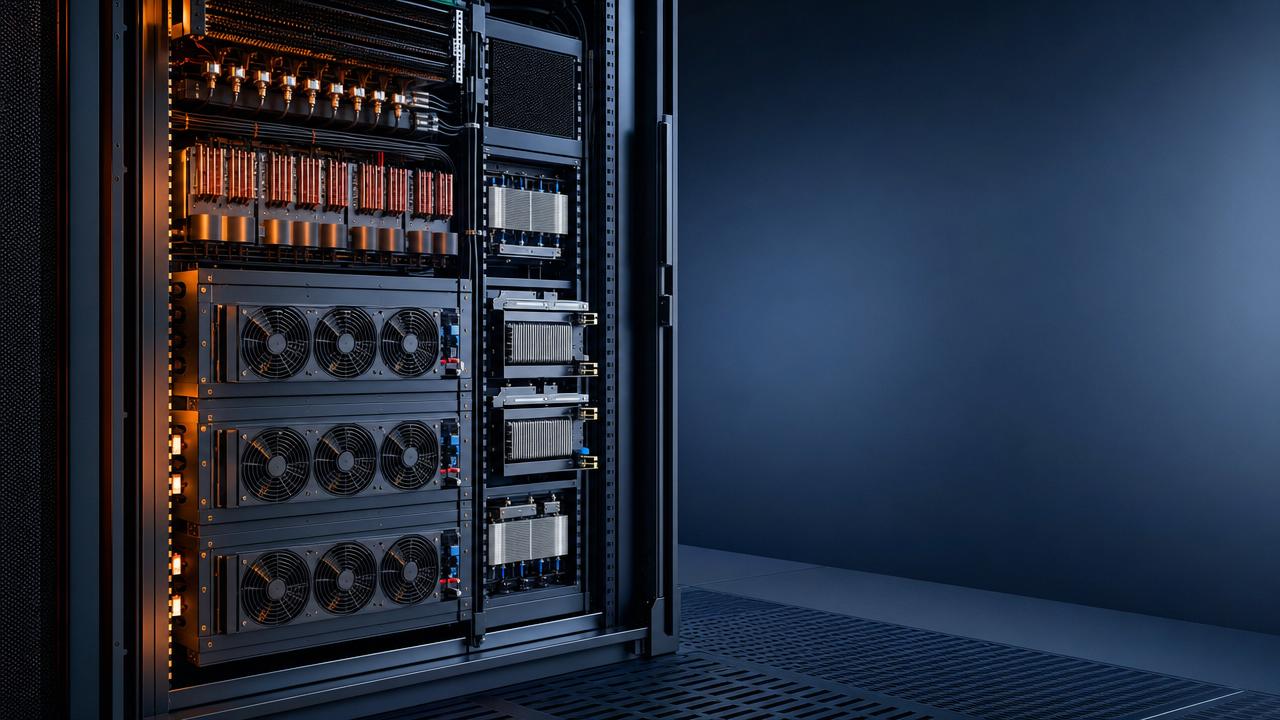
Why Rack Mounted Load Bank design matters in real operating environments
For power testing projects, Rack Mounted Load Bank design affects more than rated capacity and cabinet size.
It directly shapes heat removal, fan noise, installation density, and long-term electrical stability.
In resistor and capacitor related systems, thermal control is especially important.
Excess heat can stress resistive elements, nearby capacitor assemblies, cable insulation, and rack-level airflow planning.
A well-designed Rack Mounted Load Bank helps reduce local hot spots and supports predictable test results.
It can also limit acoustic disturbance in data rooms, laboratories, battery testing areas, and integrated equipment rooms.
Sunwin focuses on resistive load bank, Rack Mounted Load Bank, electronics load bank, liquid cooling load bank, portable load bank, battery load tester, grounding resistor cabinet, and capacitor bank solutions.
Understanding how design choices affect heat and noise makes comparison more practical and more accurate.
Different sites create different heat and noise priorities
Not every Rack Mounted Load Bank works the same way in every installation.
The same power rating may behave very differently in a telecom rack, UPS room, factory test line, or battery discharge station.
The first decision point is airflow path.
Front-to-back cooling fits common rack layouts, while side discharge may create recirculation in narrow rooms.
The second decision point is heat density.
Compact racks save floor space, but higher watt density usually requires stronger fans and better exhaust clearance.
The third point is noise tolerance.
An industrial workshop may accept louder operation, while an equipment room near operators often needs quieter performance.
These differences explain why Rack Mounted Load Bank design should be judged by use scenario, not only by kilowatt number.
Scenario 1: Dense rack installations need controlled airflow and low recirculation
High-density installations often place a Rack Mounted Load Bank beside power supplies, battery systems, or test electronics.
In these layouts, heat cannot simply leave the cabinet; it must leave the room efficiently.
A strong design uses clear air channels, low obstruction around resistor grids, and balanced fan placement.
This reduces internal temperature rise and lowers thermal stress on adjacent devices.
Look for separation between intake air and discharge air.
If hot exhaust returns to the intake side, efficiency drops and fan speed often increases.
That creates both higher temperature and more noise.
In resistor-based testing, stable cooling also helps keep load values more consistent during extended operation.
Key checks for dense rack use
- Airflow direction matches rack and room ventilation plan.
- Resistive elements are spaced for uniform heat release.
- Fan maintenance access is simple from front or rear.
- Temperature protection is placed near the true thermal risk points.
- Cable entry avoids blocking intake or exhaust zones.
Scenario 2: Operator-facing rooms require quieter Rack Mounted Load Bank performance
Noise becomes a larger issue when testing happens near people, control desks, or service benches.
In these cases, Rack Mounted Load Bank design should limit both fan noise and airflow turbulence.
Small high-speed fans are often louder than larger lower-speed fans delivering the same cooling volume.
Poor grille design can also add whistling or vibration noise.
Cabinet rigidity matters here.
If sheet metal panels resonate, even acceptable fan systems can sound harsh during full-load testing.
Thoughtful acoustic control does not mean weak cooling.
It means better airflow efficiency, steadier fan control, and reduced mechanical vibration.
For mixed resistor and capacitor environments, lower vibration can also support more stable assembly integrity over time.
What usually drives noise upward
- High static pressure caused by blocked airflow paths.
- Fan oversizing without proper speed control.
- Tight internal layouts that create turbulent exhaust.
- Thin cabinet structures that amplify vibration.
- Dust buildup that forces fans to work harder.
Scenario 3: Long-duration testing needs thermal stability, not only peak capacity
Some projects run short burst tests, while others require sustained loading for hours.
For long-duration duty, Rack Mounted Load Bank design should be evaluated by temperature balance over time.
Peak power capability is not enough if internal heat accumulates unevenly.
Resistor material choice, thermal spacing, insulation class, and sensor logic all matter.
Hot spots can shift resistance behavior and shorten component life.
In cabinets near capacitor banks or battery test equipment, this thermal drift may affect neighboring systems too.
A durable Rack Mounted Load Bank should support stable discharge performance with clear thermal derating information.
Transparent thermal data helps compare products more effectively than headline power figures alone.
How application differences change Rack Mounted Load Bank selection
Selection becomes easier when major scenarios are compared directly.
Practical design features that improve heat control and reduce noise
A strong Rack Mounted Load Bank usually combines several small engineering decisions.
- Optimized resistor arrangement for even heat distribution.
- Dedicated intake and exhaust zones to prevent hot air return.
- Smart fan control that follows actual thermal load.
- Overtemperature protection on elements and airflow-critical zones.
- Low-resonance cabinet structure with secure fasteners.
- Clear maintenance access for filters, fans, and wiring.
If site heat is already difficult to manage, liquid cooling load bank options may be worth comparing.
If mobility matters more, a portable load bank may fit better than a fixed rack solution.
The right choice depends on cooling limits, duty cycle, and space constraints.
Common mistakes when judging Rack Mounted Load Bank heat and noise behavior
Several common mistakes lead to poor equipment matching.
- Comparing only rated kW and ignoring continuous thermal performance.
- Assuming rack installation automatically means easy room integration.
- Ignoring exhaust direction and clearance around nearby cabinets.
- Accepting noise figures without knowing distance and load condition.
- Overlooking maintenance access that later affects cooling reliability.
- Treating resistor temperature rise as unrelated to nearby capacitor or battery systems.
These points matter because a Rack Mounted Load Bank performs as part of a full electrical and thermal environment.
A good design reduces risk before operation begins.
A simple evaluation path before final selection
Use a structured review before choosing a Rack Mounted Load Bank.
- Define the real duty cycle, not just the maximum load point.
- Map rack airflow direction against room ventilation.
- Set acceptable noise limits for the actual installation area.
- Check thermal protection, alarms, and sensor placement.
- Review service access for filters, fans, and resistor assemblies.
- Confirm compatibility with related resistor and capacitor equipment.
Sunwin can support evaluation across resistive load bank, Rack Mounted Load Bank, electronics load bank, battery load tester, grounding resistor cabinet, and capacitor bank applications.
When design is matched to the real scenario, heat control improves, noise becomes manageable, and long-term value becomes clearer.
If you are comparing options, start with airflow path, thermal stability, and acoustic behavior before looking at price alone.


Please give us a message
